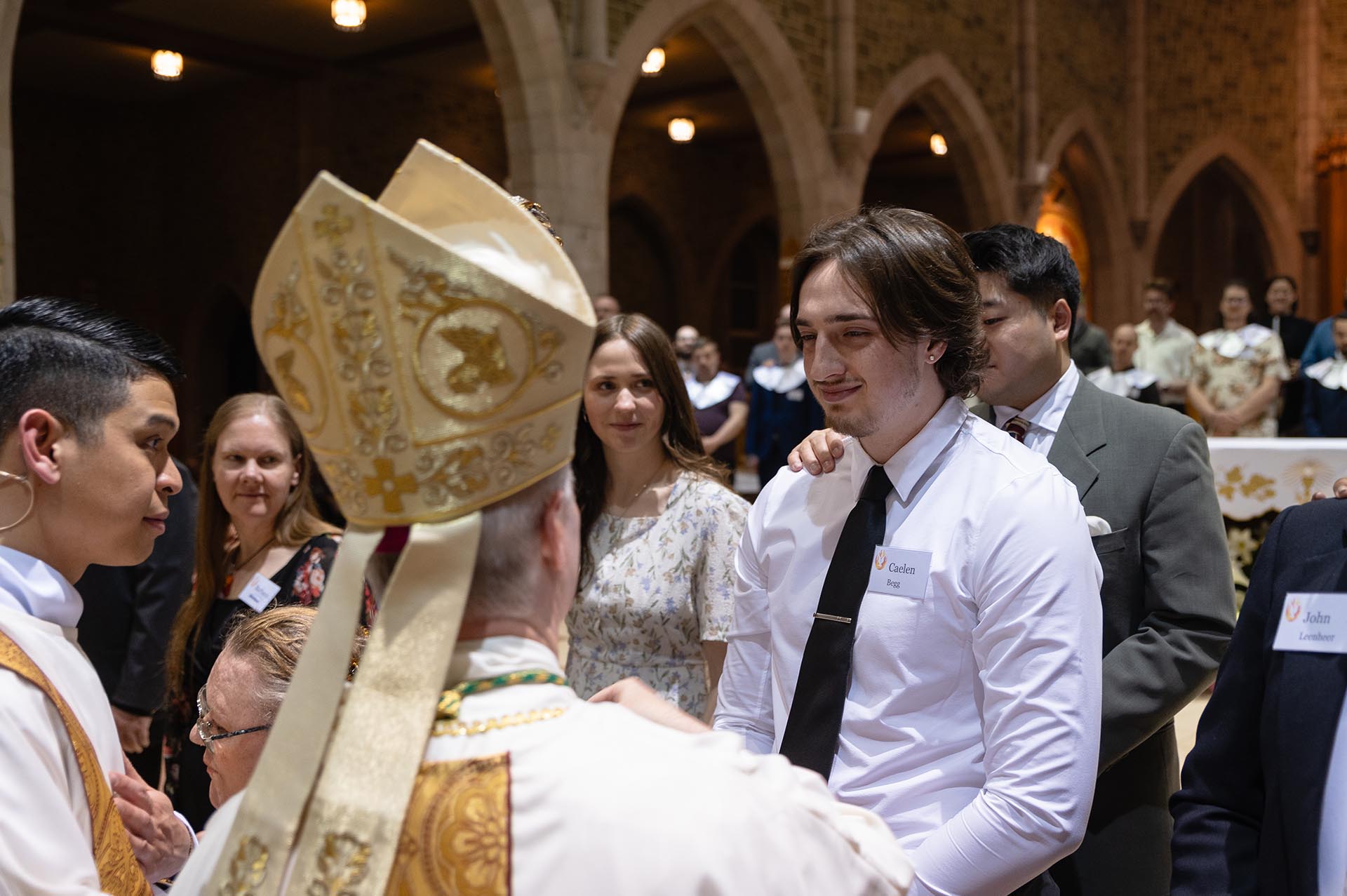
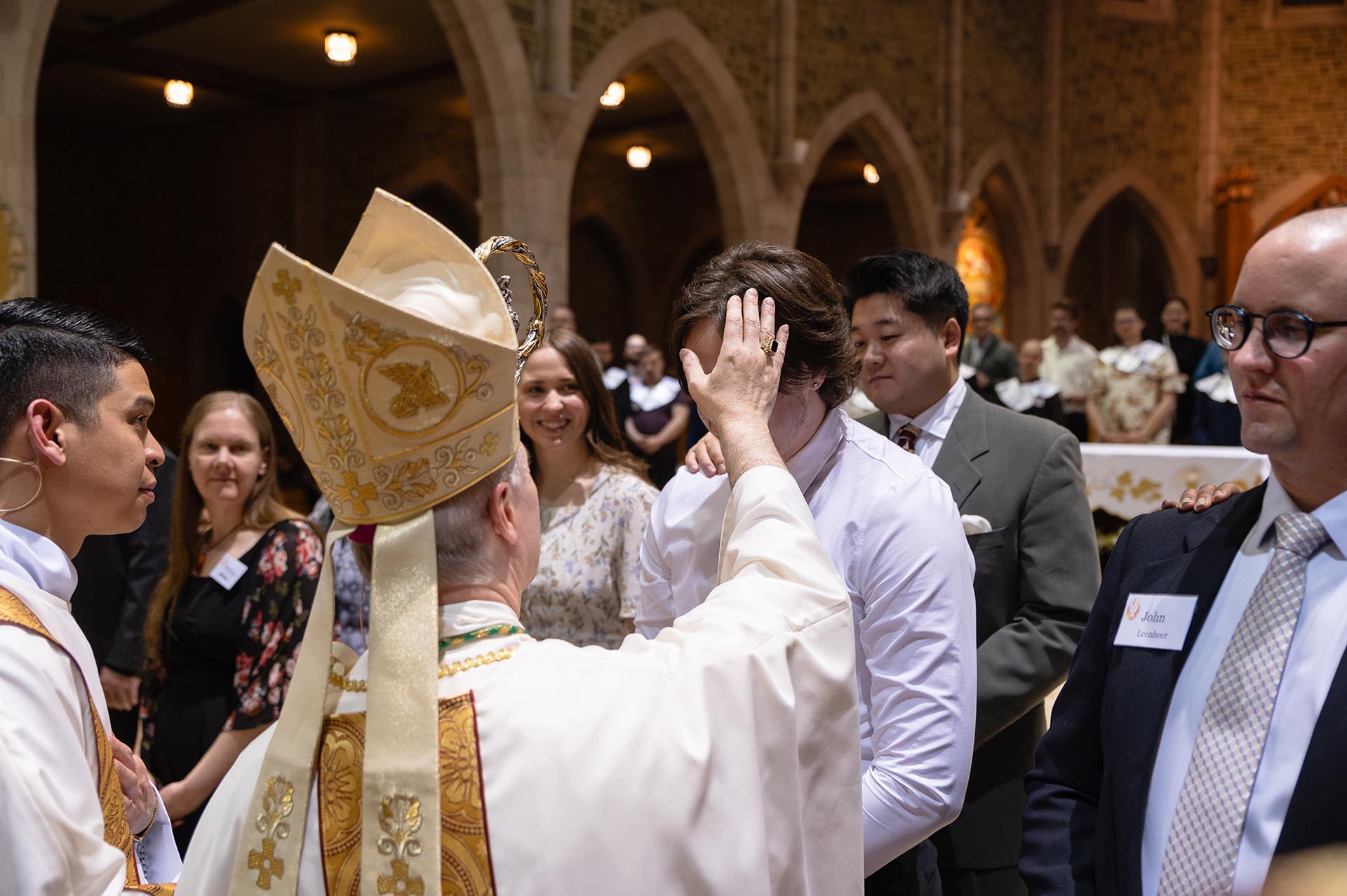
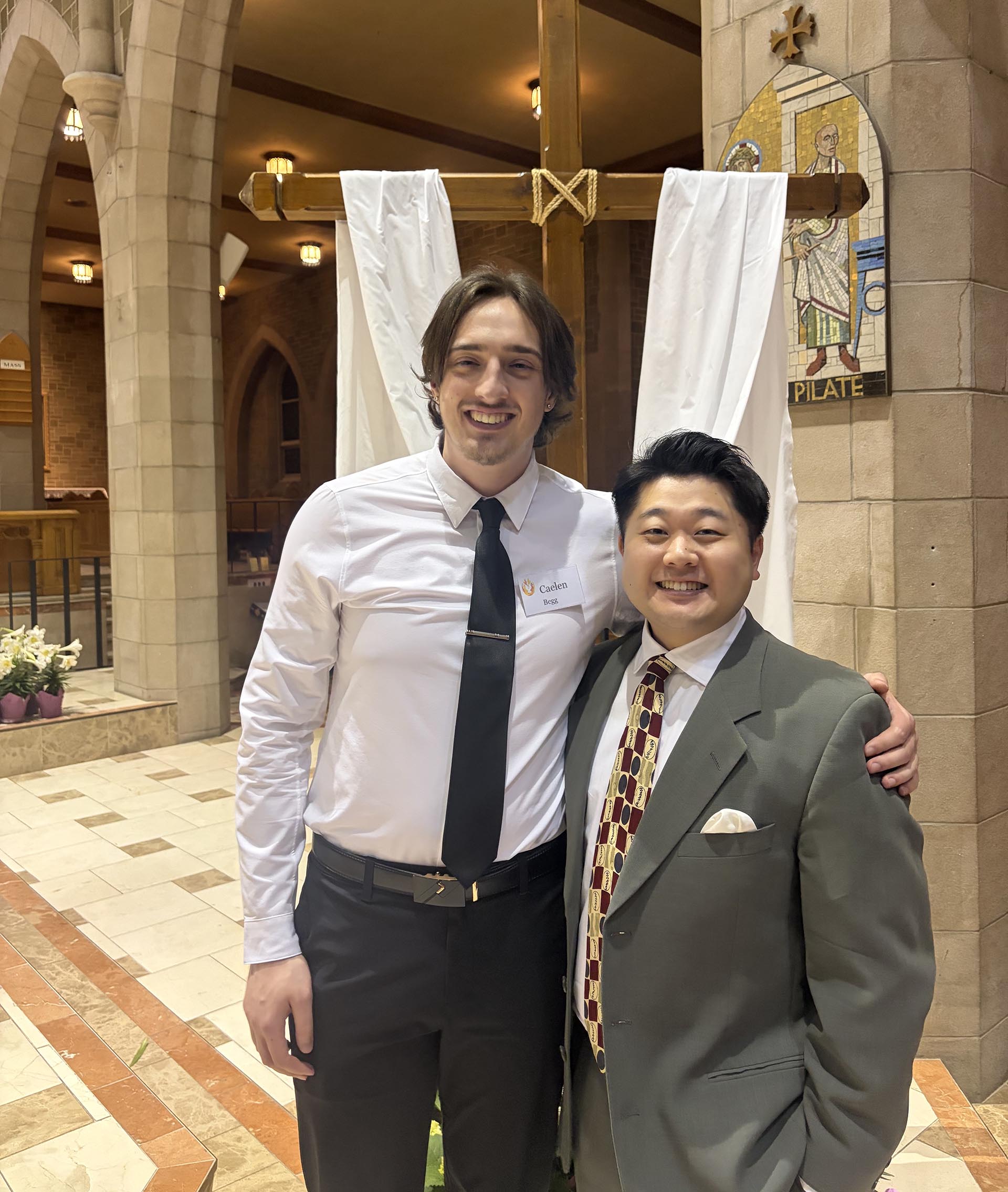
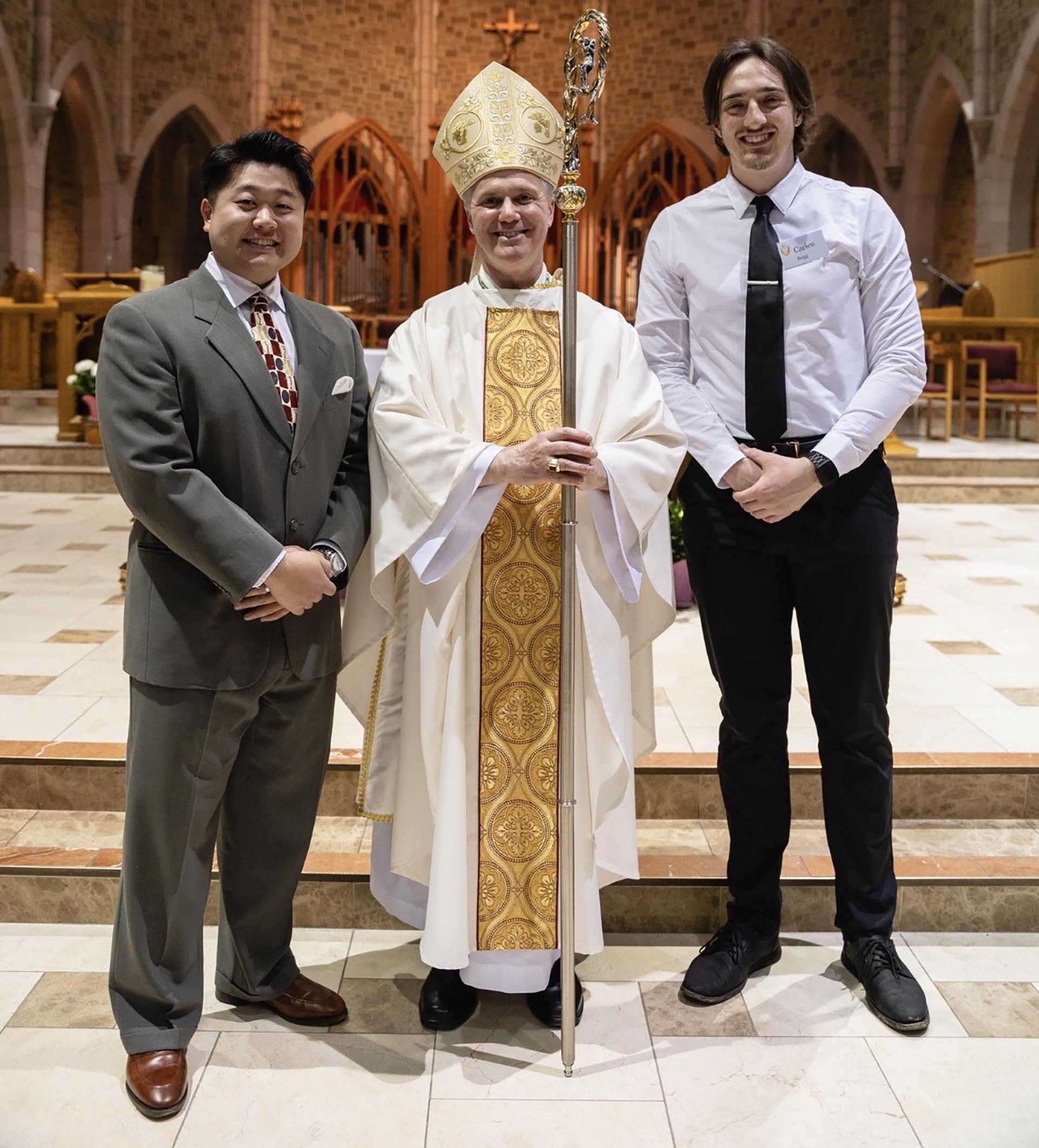
Caelen Begg didn’t start looking for Catholicism—he started by testing what he believed. At 26, he was confirmed this past Holy Saturday at the Easter Vigil and now works in IT after leaving his role preaching and pastoring youth at a Protestant church.
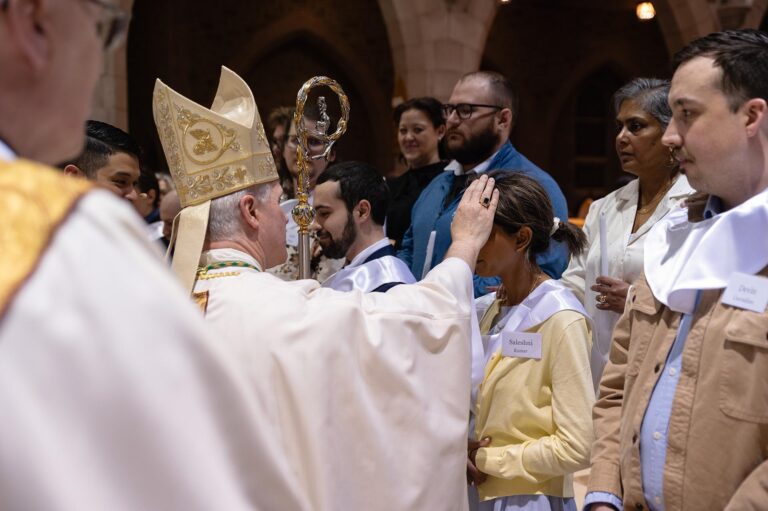
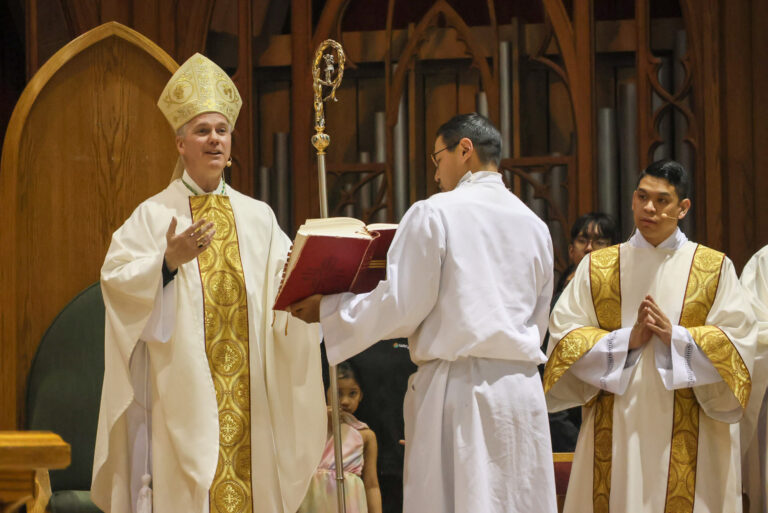
Thirty-four people were received into the Catholic Church at St. Joseph’s Basilica during the Easter Vigil alone—up significantly from nine the previous year, and nine again in 2024.
Learn more about How Do I Become Catholic?
Caelen grew up in an Evangelical home, formed by parents who gave him what he calls “a solid foundation in Christianity.” As a teenager, Caelen describes himself as “very zealous” in his faith. Then, at 17, he hit a crisis moment: after a debate with a Muslim friend, he realized he couldn’t actually defend his own beliefs.
He admitted to himself that he had been Christian largely because his parents were Christian. Wanting conviction rather than inheritance, he studied intensely—not only Islam, but also other faiths and competing claims. Yet in the midst of that search, Christianity clarified for him rather than fading.
“Then I knew, for myself, that the Resurrection was true,” he says, and his faith became stronger. Apologetics — arguing and explaining the faith with intellectual seriousness — became a passion and a practice.
He served where he was: volunteering as a youth leader, worship drummer, and member of the missionary team. By 23, he was preaching and working at his church as an intern and then as youth pastor, intending to train for a future as a lead pastor.
But the irony — he calls it that — was that his work at a Protestant church is what pushed him toward the Catholic Church. As he learned more about Christianity, early Christian history came into view, and he began noticing a mismatch. “My church did not look like the church Jesus established,” he says.
He also saw division where one might expect clarity: churches down the street and churches after that used the same Bible, yet reached “totally different conclusions.” The question that followed him was blunt: did any church have it all right, and did it even matter?
A close Catholic friend — now his godfather — entered the story at the right moment. Caelen brought questions and, in a short conversation, felt several misconceptions he had absorbed his whole life begin to collapse.
He realized the Catholic Church wasn’t a caricature of “crazy idol worshippers,” but something he could study without fear. He often returns to a line associated with Ven. Fulton Sheen: that many people don’t actually hate the Catholic Church so much as they hate what they mistakenly believe it to be.
For Caelen, the movement toward Catholicism didn’t happen all at once. It came through “many small moments” of prayer and study — every critique he made of Catholic teaching meeting, in his own mind, a clearer explanation. A major breakthrough came when two Protestant apologists and theologians he admired converted to Catholicism. They understood Scripture and history better than anyone he knew, and once they stopped fighting Catholicism, Caelen felt he could not keep dismissing it himself.
What inspires him most about the present season of preparation is the size and demographic of the catechumens and candidates in his parish—especially the young university students who have “done their research.” He sees a pattern happening more widely in the Western world: people rejecting shallow modern options and returning to tradition that, to him, holds the truth.
The belief he names as most meaningful is the Eucharist — Christ truly present in the Blessed Sacrament. He spent 24 years believing the bread was merely symbolic, taken “in remembrance” only.
Accepting the Church’s teaching feels, to him, like recovering something central he had been deprived of. He also says it was the first Catholic doctrine he could accept as a Protestant, because it seemed so clear in Scripture and in Church history. And with that clarity comes a moral seriousness: how could he receive the host while living in sin? That is why he is eager for the Sacrament of Reconciliation as well as the Sacraments of Initiation.
To anyone considering entering the Church, he offers a direct instruction: investigate with an open mind, remove bias, and “put it to the test.” And he urges prayer — because he believes God guides those who sincerely seek Him. He points to Jesus’ promise: “Everyone who is of the truth listens to my voice” (John 18:37).
Sign up for The WINDOW, the weekly electronic bulletin with news from the Archdiocese of Edmonton.