This summer, I had the once-in-a-lifetime opportunity to travel to Rome with Newman Theological College, along with thirty -something other pilgrims, for the Jubilee of Youth, during this 2025 Jubilee Year of Hope. It’s difficult to put into a few words the effect that the pilgrimage had on me, but I’ll try my best.
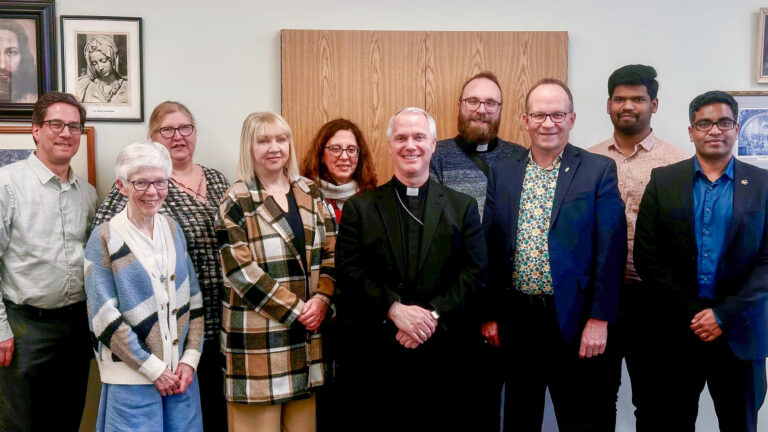
(Thirty-six young pilgrims start their journey to Rome as part of the Jubilee of Hope. Led by Fr. Roger Niedzielski, the group’s chaplain, the pilgrimage is a hybrid study-abroad program offered by Newman Theological College.)
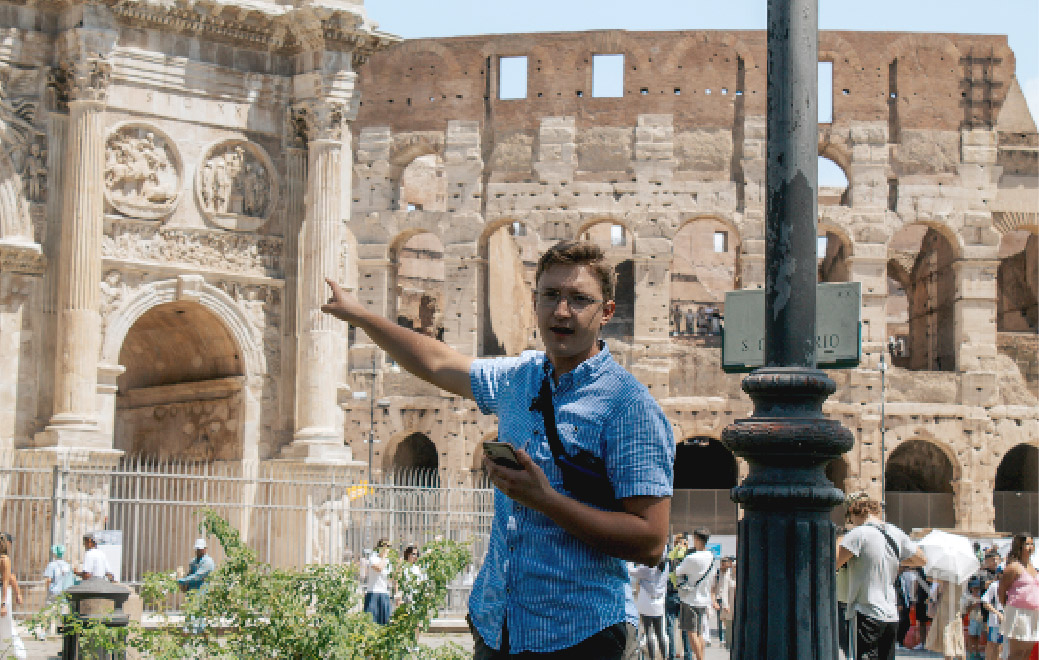
 We left Edmonton on July 24, arrived in Rome on the 25, and departed on August 8th. Some highlights of our pilgrimage included meeting nearly every day at St. Peter’s Square, visiting sites like the four Major Basilicas (St. Peter’s, St. John Lateran, St. Mary Major, and St. Paul Outside the Walls), the Roman Forum, the Pantheon (the Basilica of St. Mary and the Martyrs), the Catacombs of St. Callixtus, and the town of Assisi. Other activities included a Canadian Pilgrims’ gathering, the Opening Mass for the Jubilee of Youth, a papal audience, a pasta-making class, a kayak tour at Lake Albano, staying up very late, getting up very early, soaking in the heat, filling up water bottles from drinking fountains, and playing kazoos. I could continue listing things until I run out of space, but this reflection isn’t about the cool things I did.
The real question is: did it all mean anything? I’ll answer this question with an anecdote. One of the days, we did a tour of an underground archeological site: a first-century necropolis unearthed in the 1940’s, housing pagan and Christian tombs.
We followed the maze of stone walls and archways, looking at the artwork in the tombs and the decorations on the sarcophagi. These were all very neat, but they weren’t the reason we were there; we were there to see one particular tomb. This tomb was found not even a century ago, directly beneath the altar of St. Peter’s Basilica: exactly where St. Peter’s tomb had been traditionally held to be.
Several bone fragments were found stored nearby, with graffiti indicating their possibly belonging to St. Peter himself. I took a moment gazing at these fragments, which had been placed back in the original tomb. At the time, I could hear Mass going on above, in the main basilica. It was striking: there I was, at the burial place of an apostle who walked the earth with Jesus, became a leader in the Early Church, and gave his life as a martyr.
Two thousand years later, the Mass was now being celebrated a few metres above. It was like seeing a physical thread of continuity from the Early Church to today. The same faith held by the man who laid in that tomb is the faith that I hold today, however imperfectly. I am part of the same Church that he was (and is) a part of. He gave his life for it and was buried in a simple tomb; now, he’s honoured with a gigantic basilica covered in gold and marble, which millions of people visit every year.
This thought struck me constantly on our pilgrimage: these humble saints (St. Peter, St. Cecilia, St. Francis, St. Clare, etc.) who gave up everything are now honoured with basilicas, gold, marble, statues, and paintings. It’s not about the cool stuff, but it gives us a small hint of what happens when we give up our lives for the Gospel. If the saints have had this much of an impact on earth, how much more of a spiritual impact have they had? How much more is God glorified because of their witness and prayers, and their effect on others?
We are often so short-sighted when we look at what we might have to give up to be Christ’s disciples. The saints gave up everything and looked like fools for it: now we recognize that their lives reflected God’s grandeur.
In the end, one of my biggest takeaways from the pilgrimage is that the Church is so real.
The tombs of apostles, basilicas of saints, and glorious artwork are reminders of this, but so are the celebrations of the Sacraments and the presence of fellow pilgrims, which we don’t need to be in Rome to recognize. We’re all pilgrims; we all need a tangible connection to the Church through our parishes and otherwise, and we are all here to get each other to heaven.
I hope I, and my fellow pilgrims, can continue to live our faith precisely as pilgrims of hope, travelling to heaven while firmly rooted on the foundation of the Church established by Christ and spread by the Apostles. And, if I get to participate in that faith by sharing in the priesthood of Christ, which He gave to his apostles and which they passed on through ordination all the way down to the present day, I will be a lucky pilgrim indeed.
(Fr. Paul Kavanagh will preside at the Closing Mass for the Jubilee 2025 year of Hope at 10:30 a.m. on Sunday, December 28 at St. Joseph’s Basilica. This is also the Feast of the Holy Family. All are invited to attend the Mass)
Read more about the Jubilee 2025
Sean Ulrich is a fourth-year seminarian for the Archdiocese of Edmonton. This article was first published in the fall 2025 edition of the Exiit Qui Seminat, the St. Joseph Seminary newsletter.
The Pilgrims after celebrating Mass in the Catacombs sidebar:
“These humble saints who gave up everything are now honoured with basilicas, gold, marble, statues, paintings. It’s not about the cool stuff, but it gives us a small hint of what happens when we give up our lives for the Gospel.”