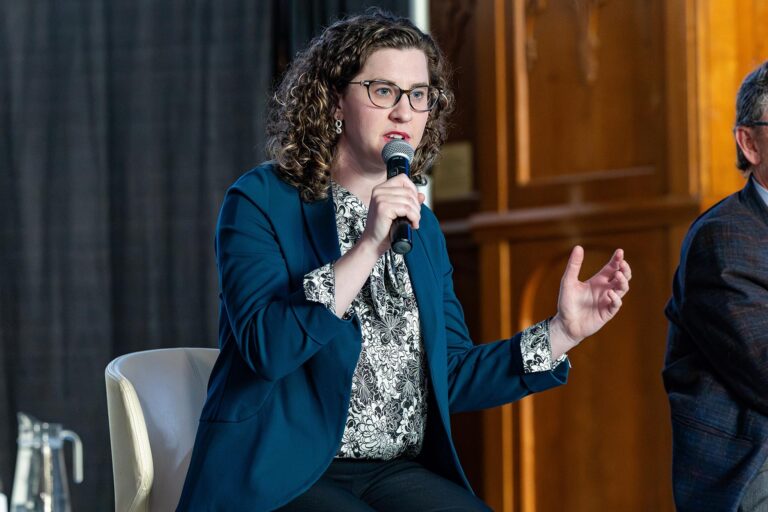
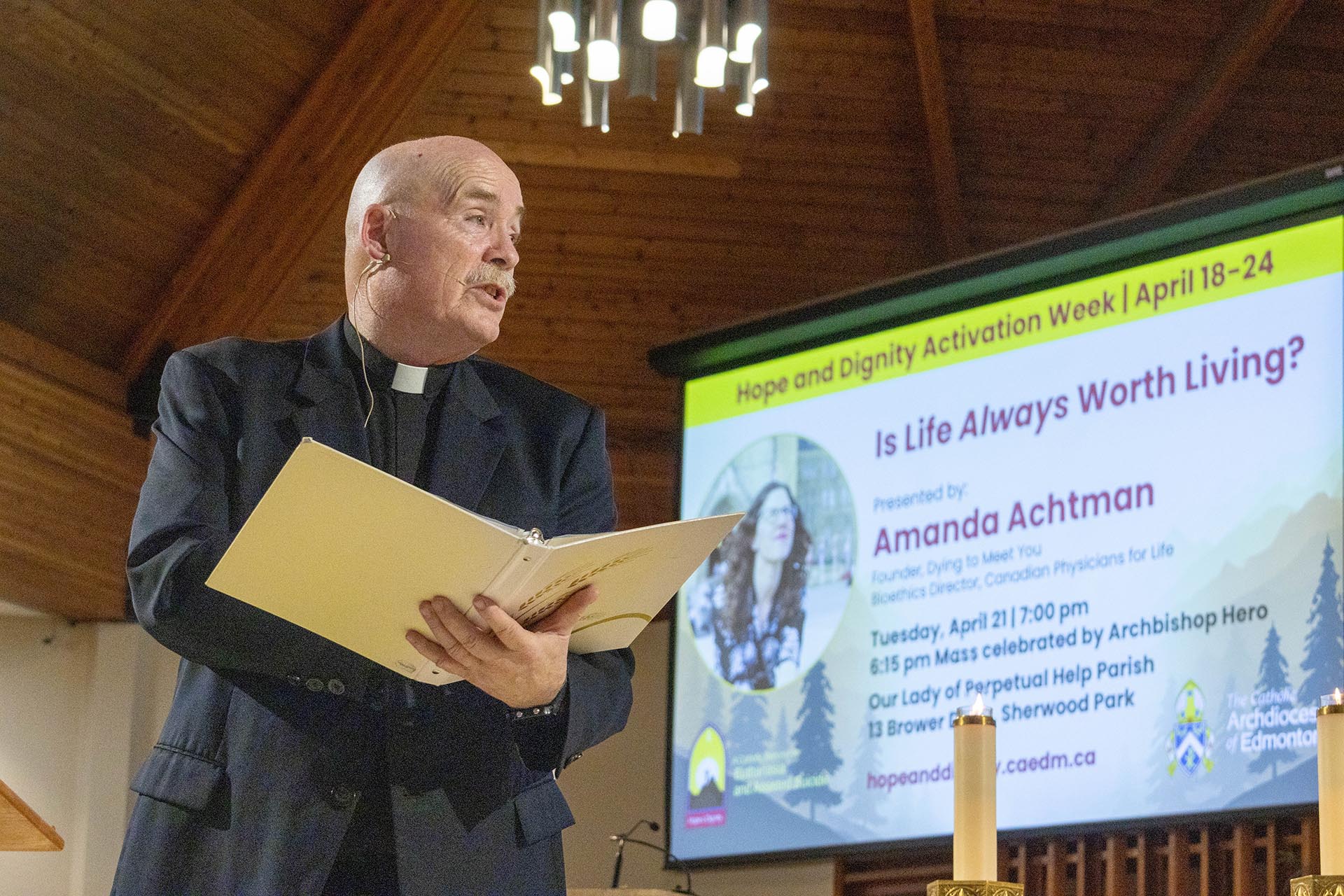
Amanda Achtman hosted an Archdiocese of Edmonton forum on April 21 that brought together personal testimonies and Catholic perspectives on aging, disability, suffering, and end-of-life care, as debate continues in Canada over the expansion of Medical Assistance in Dying (MAiD).
“Is Life Always Worth Living?: Responding to the Rise of MAID in our society” is part of Hope & Dignity Activation Week. The initiative, Hope & Dignity: A Catholic Response to Euthanasia and Assisted Suicide, aims to equip Catholics to witness in their families, parishes, workplaces, and communities. Organizers said the Church offers “real hope and true dignity to those who are suffering and dying.”
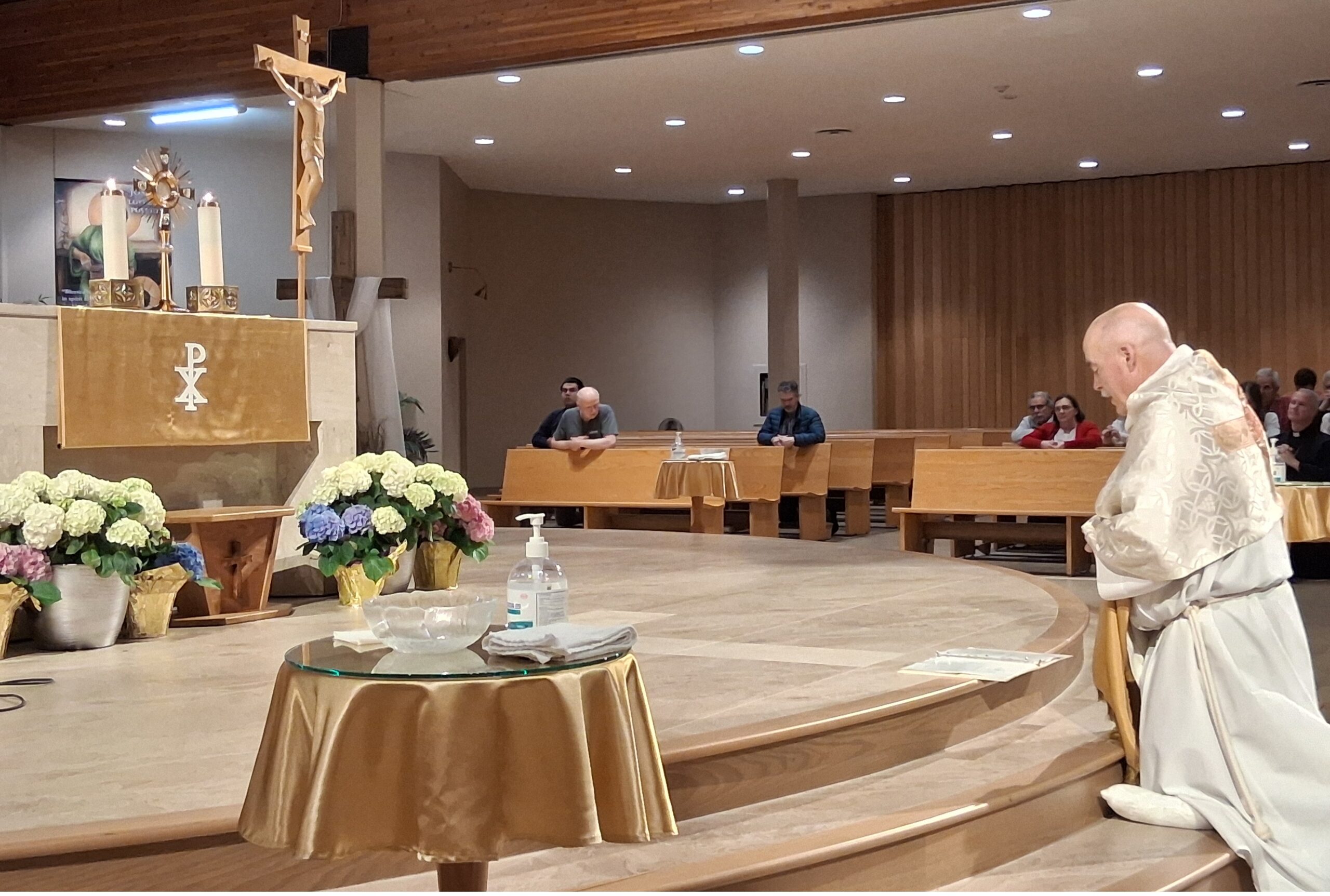
The evening began with Mass at Our Lady of Perpetual Help Parish in Sherwood Park, celebrated by Archbishop Stephen Hero, followed by a discussion of MAiD, personal testimonies from local Albertans. Adoration capped off the evening.
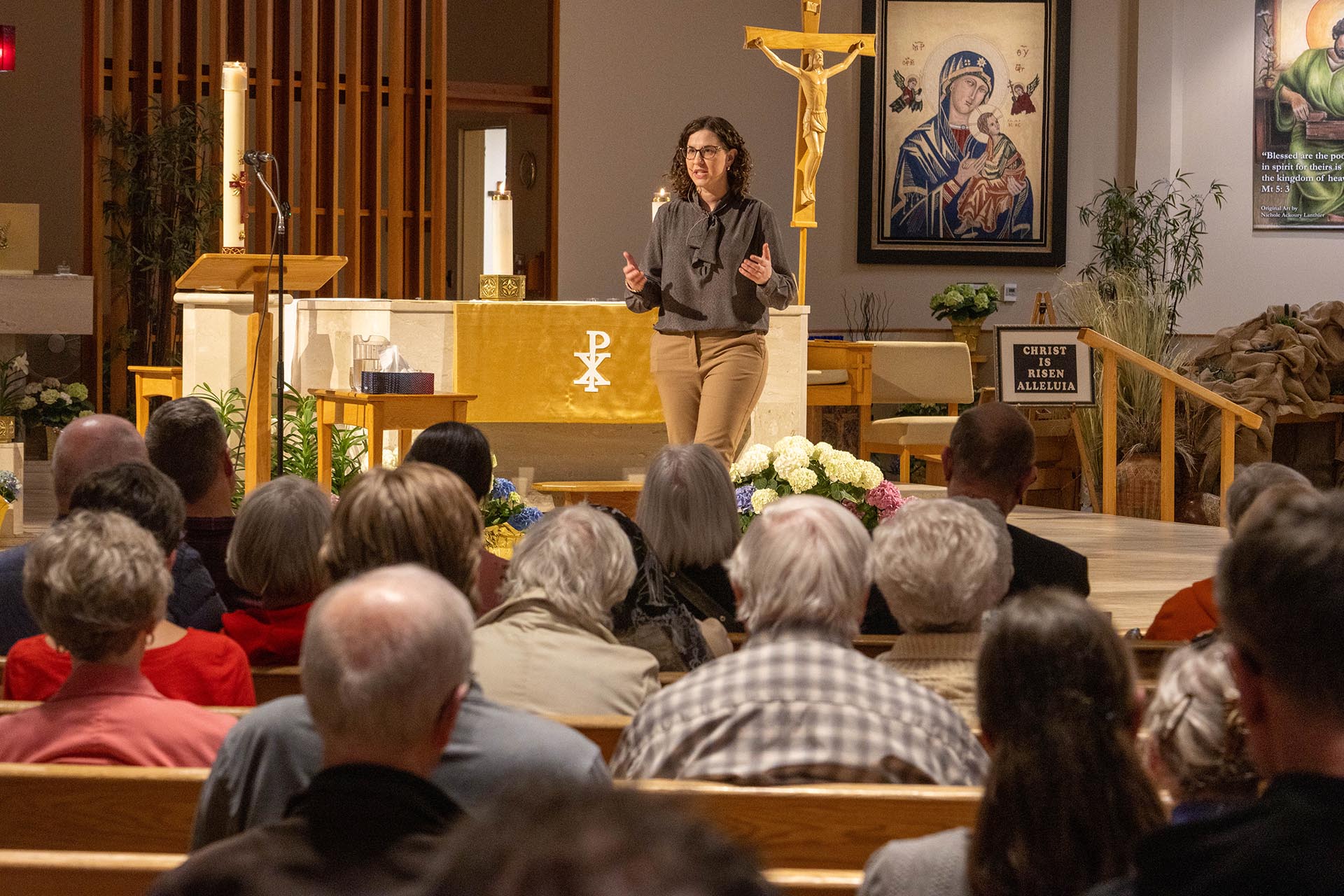
Achtman, founder of Dying to Meet You, opened with a family story about an elderly grandfather who, as his health declined, was moved from the family dining room to eat alone in the kitchen. The speaker asked: “Do the elderly have a seat at the table of our lives?”
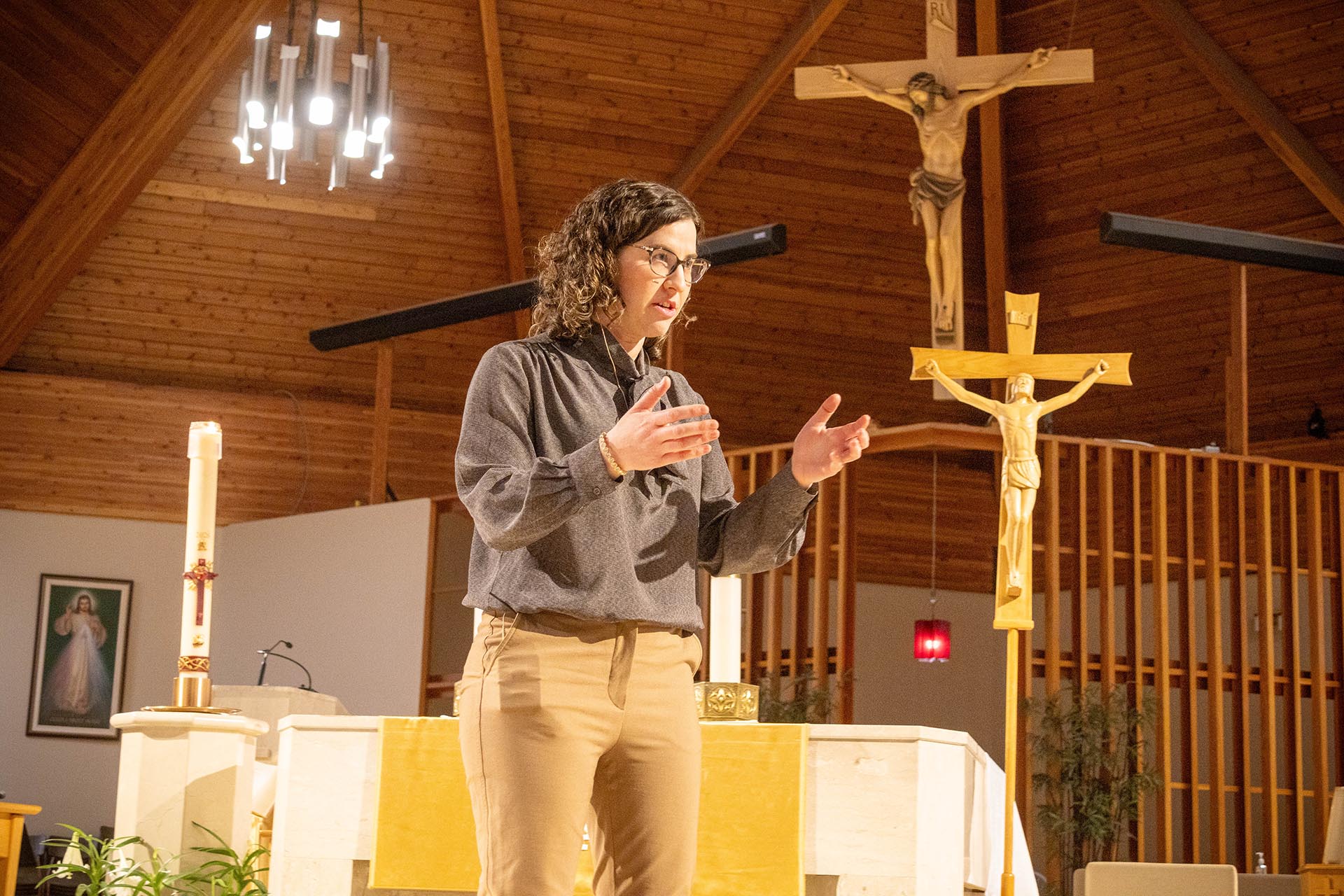
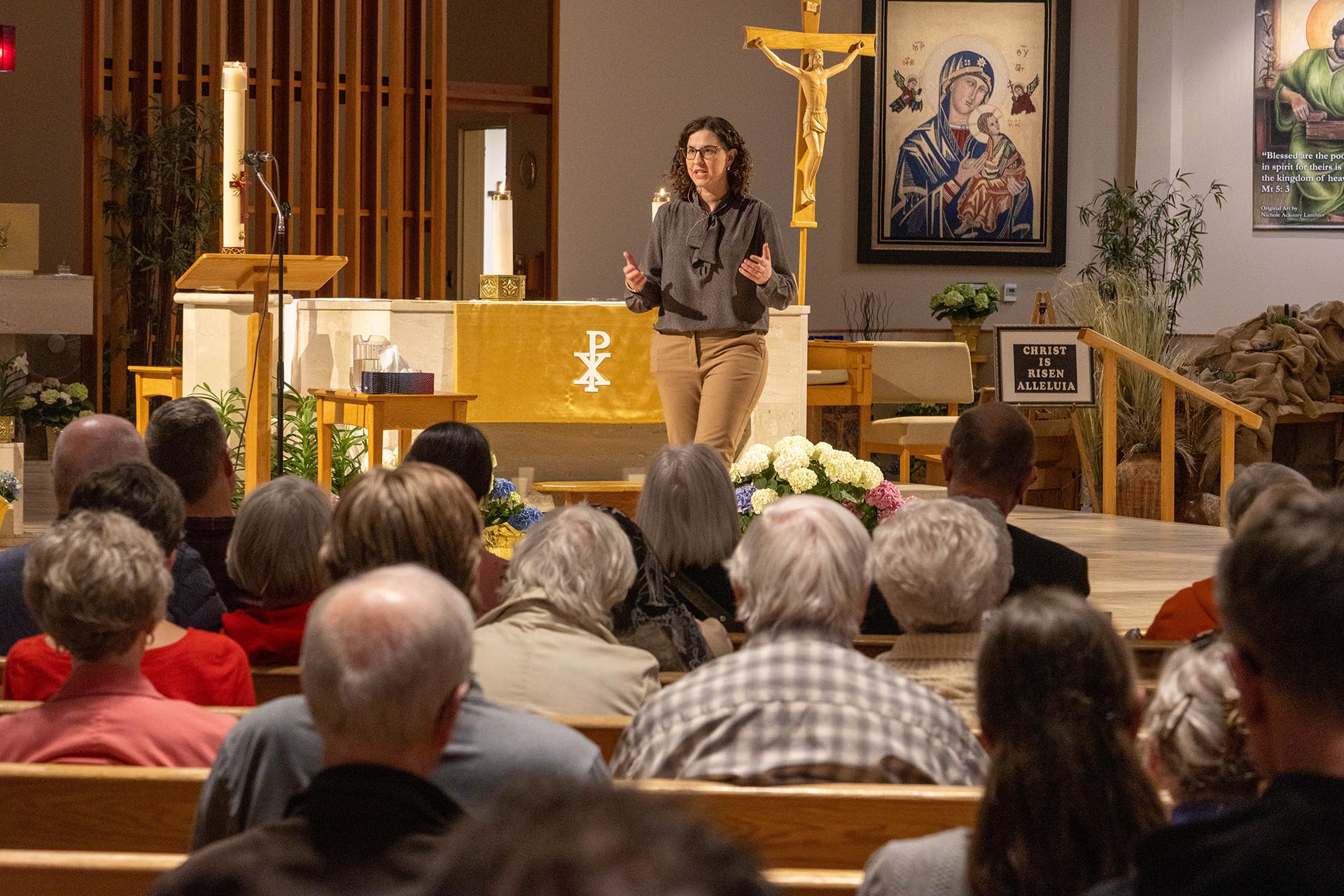
The discussion echoed Catholic teaching that old age is a meaningful stage of life, with Pope St. John Paul II describing aging as capable of “natural development” and “fulfillment,” and emphasizing the elderly’s “right to life and to the fullness thereof.”
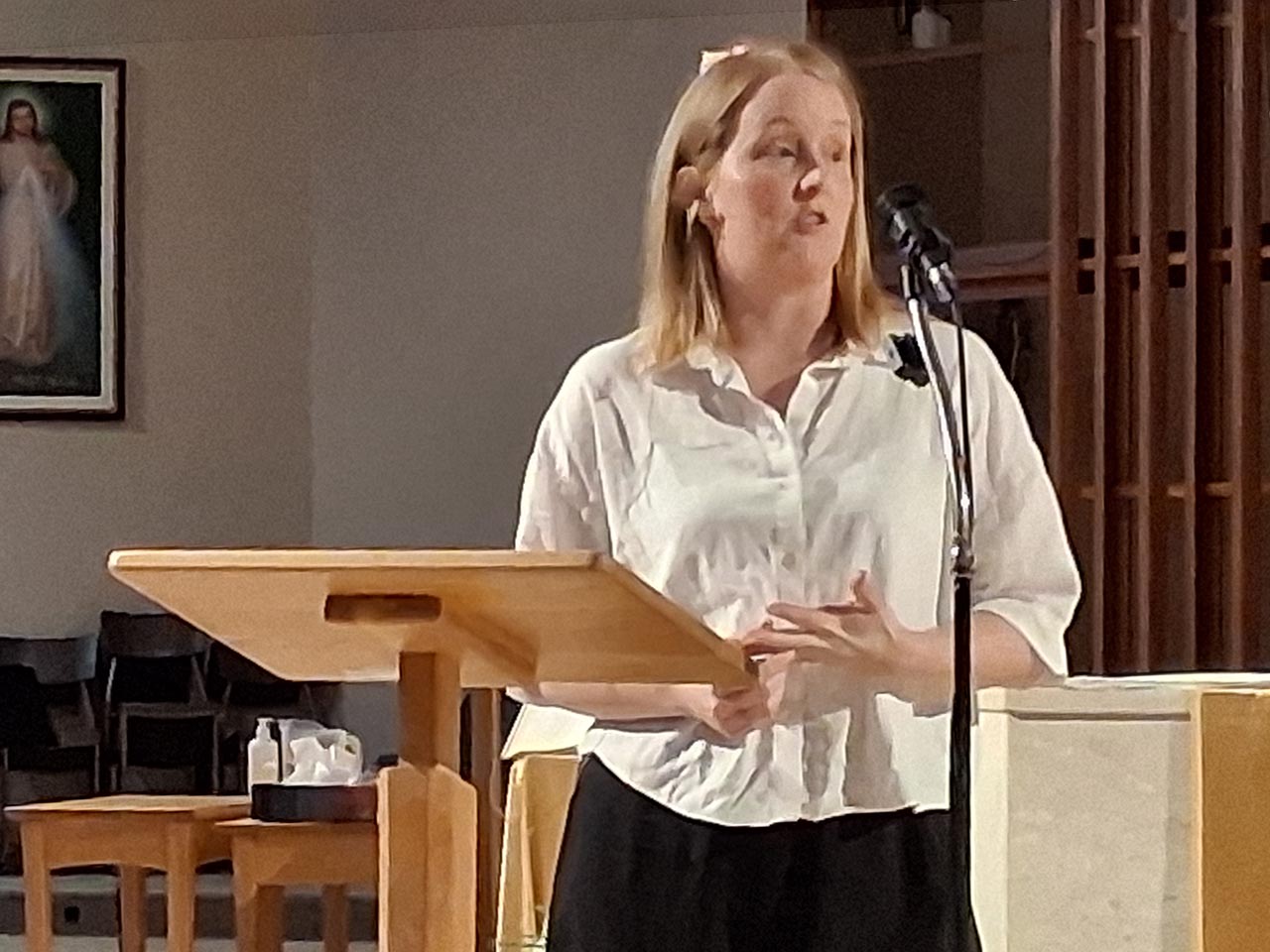
The first testimony came from Brittany Cavanagh, a mother who described pressure during pregnancy after learning her unborn child had serious conditions. She said termination was repeatedly presented as the “better” option. She chose to continue the pregnancy after finding support, and her daughter Joanna, born in May 2023, required major medical care. Cavanagh said Joanna “radiates love and empathy,” and that the experience reshaped her understanding of dignity beyond health or independence.
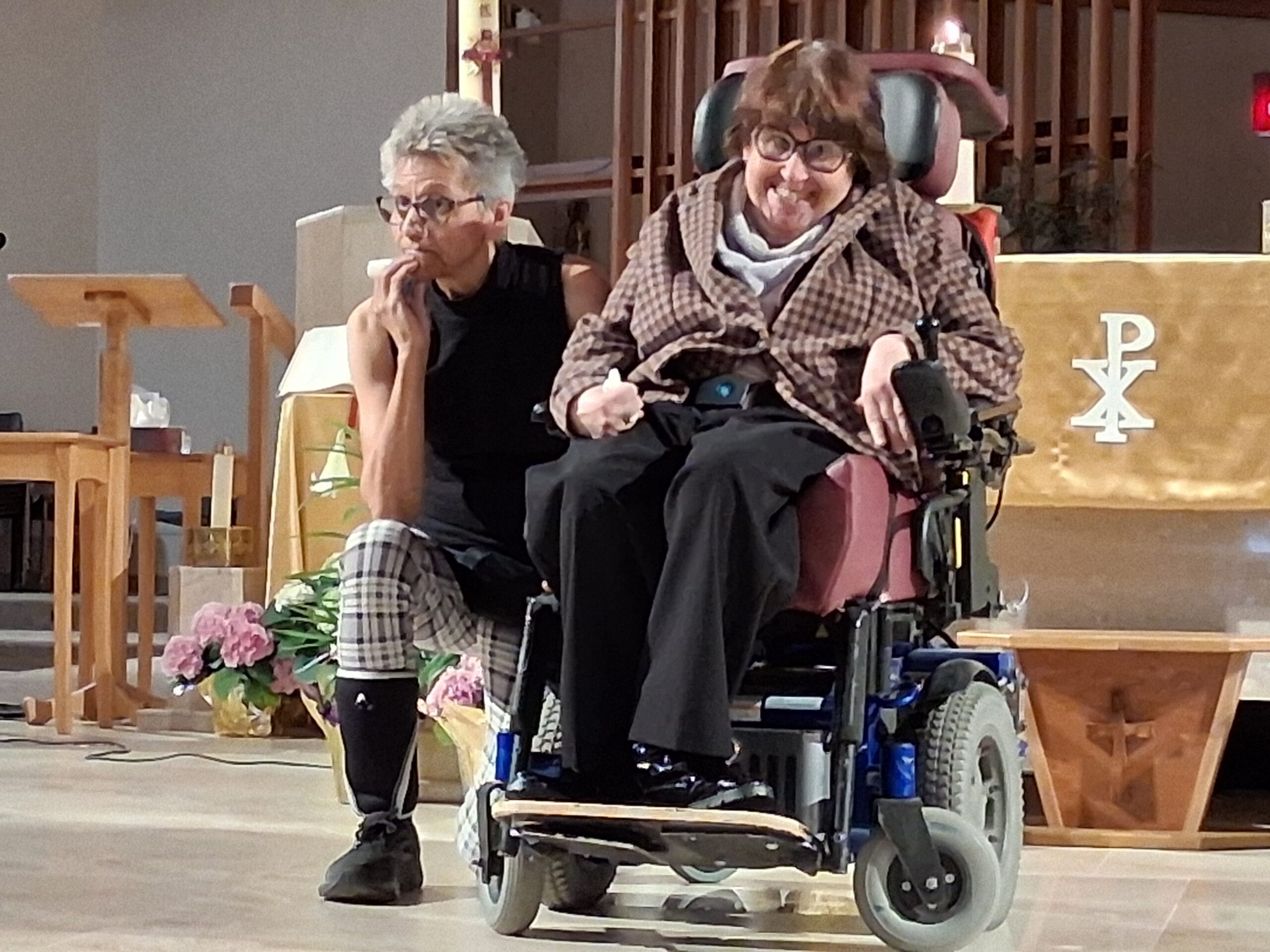
The second testimony was from Dr. Heidi Janz, a University of Alberta disability ethicist with cerebral palsy. She described being given a bleak prognosis at birth and her mother’s decision to bring her home rather than institutionalize her. She warned that social narratives around dependence can shape attitudes toward life, calling the influence of MAiD normalization the “insidiousness” of the idea.
According to Catholic teaching, euthanasia is always the wrong choice. To support aging and dying naturally, the Church supports all of the tools of palliative care, disability assistance, and psychosocial supports to help people live well until they die.
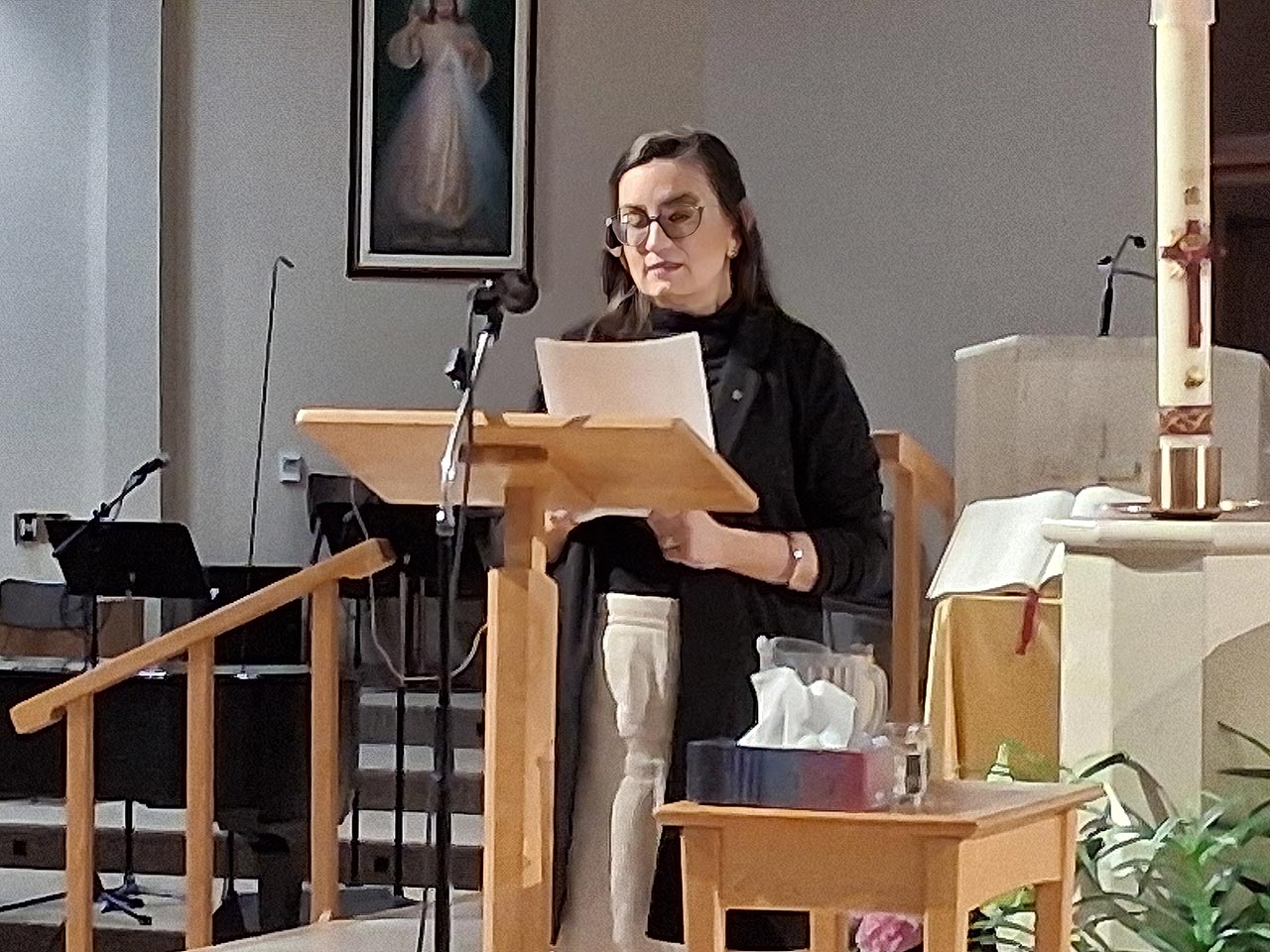
The final testimony came from Erin, who spoke about her grandmother’s death in 2024 at age 87. She said her grandmother lived with chronic pain in care but was not terminally ill, and later chose MAiD without full family awareness. She described the aftermath as grief and exclusion, alongside reflection on her grandmother’s meaningful life and close relationships.
The event comes as Bill 18, Safeguards for Last Resort Termination of Life Act, moves through the Alberta legislature. The bill proposes tightening MAiD eligibility, strengthening protections for vulnerable people, limiting unsolicited discussions of MAiD by healthcare providers, and expanding conscience protections for professionals and institutions.
The Alberta bishops have said the legislation represents a “step toward a just law” by reinforcing safeguards for vulnerable people while affirming that “true compassion lies not in ending life, but in caring for those who suffer.”
Organizers closed the evening by returning to the image of the family table, emphasizing inclusion of the elderly and vulnerable, and calling for continued reflection on aging, disability, and end-of-life care as MAiD expands in Canada.
Learn more about the Hope and Dignity pastoral initiative in the Archdiocese.
Sign up for The WINDOW, the weekly electronic bulletin with news from the Archdiocese of Edmonton.