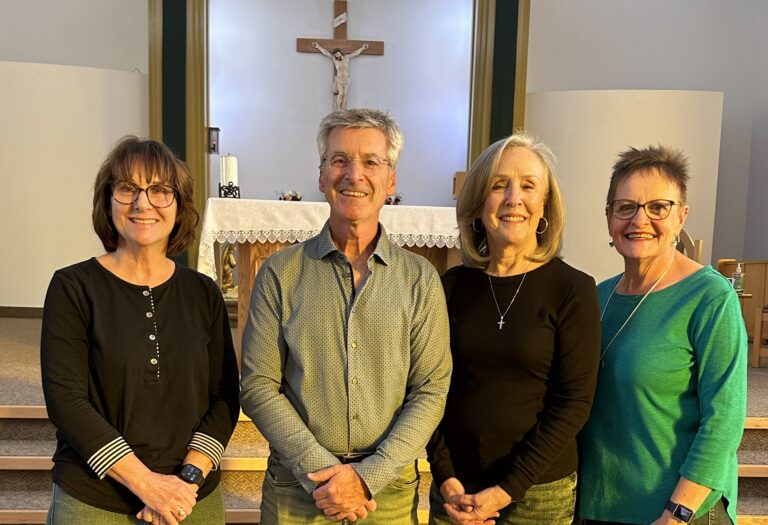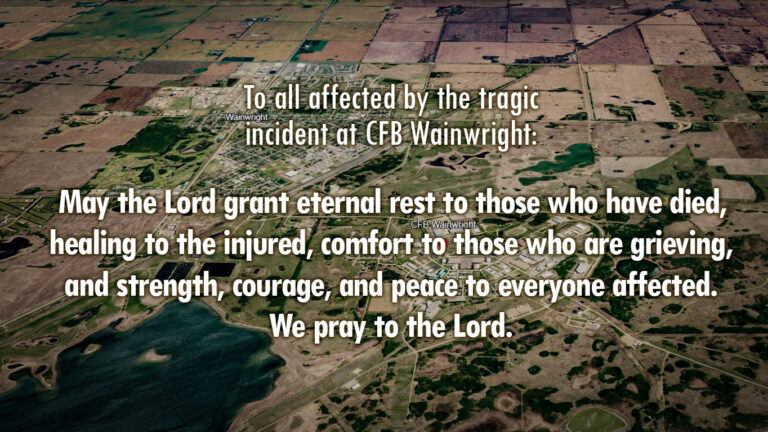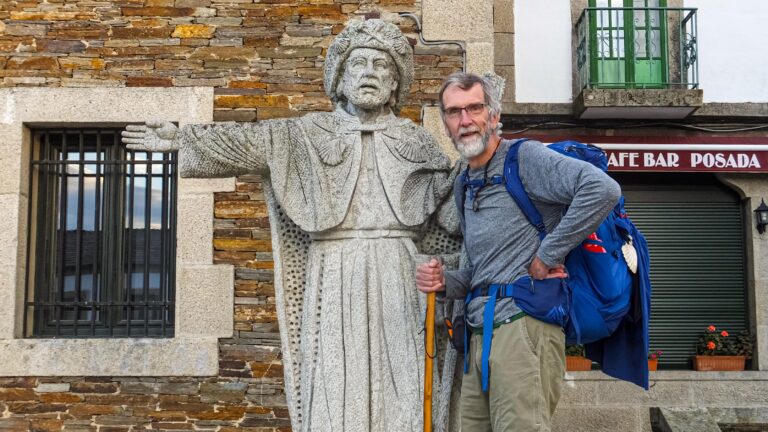
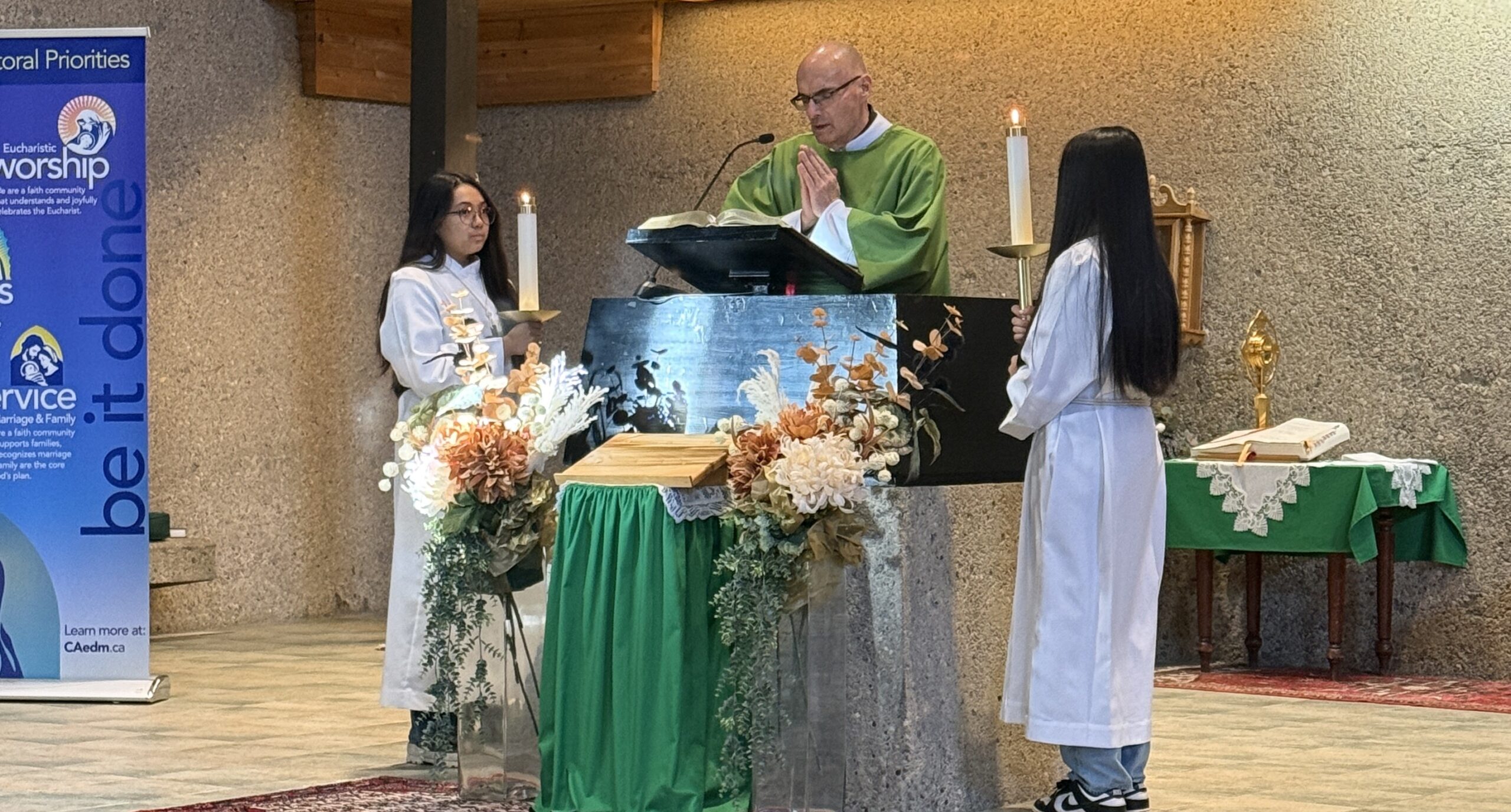
Father Felix Kusamba was travelling toward Wainwright on Oct. 17, when strong winds swept across the region. Hours later, news of a devastating fire at Canadian Forces Base (CFB) Wainwright brought a different kind of storm to the community — one marked by fear, grief and uncertainty.
Kusamba — who was filling in for Rev. Benjamin Obetta CFIC, the pastor at Parish of the Blessed Sacrament — learned of the incident through news reports and social media after Saturday evening Mass.
“May God protect our military,” he recalled thinking.
As reports of fatalities and injuries emerged, his concern extended to the safety of the surrounding community. He was with permanent Deacon Carlos Lara, whose home is close to the military base. Both men worried about what might happen next.
That night, the sounds of ambulances and aircraft overhead made rest difficult. Father Kusamba turned to prayer, reciting his rosary amid the uncertainty.
“I kept silence, and I was thinking about the community safety,” he said.
The fire began in the base’s training area at approximately 4 p.m. and spread beyond its boundaries, according to National Defence. The Canadian Armed Forces confirmed fatalities and injuries, while noting that the full impact remained under assessment.
For Blessed Sacrament parish, the tragedy was not simply a headline. Military personnel and their families are neighbours, friends and fellow parishioners — part of the community’s shared life.
By Sunday morning, the anxiety surrounding the incident was evident at Blessed Sacrament Parish. Parishioners arrived for Mass carrying sadness, disbelief and questions about those who had died or been injured.
The community gathered in silence and prayer before Mass. During the Eucharistic celebration, prayers were offered for the dead, the injured, their families and everyone affected.
“The feeling of sadness in our community was obvious,” Father Kusamba said.
He also approached a military family to express his condolences and offer prayers. The family members said little, but their grief was clear.
“They said thank you when I approached them to express my sympathies,” he recalled.
Father Kusamba said the encounter reinforced a lesson at the heart of pastoral care: sometimes, support does not require many words. It begins by acknowledging another person’s suffering and letting them know they are not alone.
For Deacon Lara, the tragedy was particularly immediate. His property lies beside the military base, not far from where the incident occurred.
While sharing supper with Father Kusamba after Saturday evening Mass, Deacon Lara learned through social media and local authorities that the fire remained uncontrolled. There was concern that he might have to evacuate his family.
A neighbour offered to check his property and later reported seeing military, medical, rescue and firefighting vehicles along the road toward the base and nearby homes.
By about 8 p.m., Deacon Lara was told the fire was under control and evacuation would not be necessary. The news brought relief, but his concern for others remained.
“The military base is not simply an institution located nearby; it is an integral part of our community,” Deacon Lara said. “Military personnel and their families are our neighbours, friends, fellow parishioners, and members of our wider Wainwright family.”
At the 10:30 a.m. Sunday Mass, Deacon Lara saw sadness and disbelief on parishioners’ faces. He invited the congregation to observe a minute of silence for those who had died and everyone affected.
His prayers asked God to welcome the dead into eternal rest, heal the injured, console grieving families and strengthen those facing the aftermath.
“I believe that one of the most important responsibilities of a deacon is to be present, particularly when people are suffering,” Deacon Lara said.
The parish’s response has extended beyond Sunday worship.
After returning to Edmonton, Father Kusamba was contacted by a chaplain at the Edmonton base and asked to assist the family of a military member admitted to the emergency department at University Hospital.
The patient was unable to speak. Father Kusamba administered the anointing of the sick and remained with the family, offering pastoral support from 8 a.m. until 11 p.m. Sunday.
He said the family was deeply appreciative.
Meanwhile, Lara has helped coordinate the parish’s response to requests for assistance. Archbishop Stephen Hero contacted him to express concern and offer support, including visiting injured people, consoling grieving families and celebrating funeral liturgies if needed.
Deacon Lara shared the offer with the parish council. A council member also contacted the local health authority to communicate that the archbishop and parish clergy were available to help.
The parish’s pastor, Father Benjamin Obetta CFIC, who was vacationing in the United Kingdom, arranged for the community to pray the rosary daily for those affected.
Together, these efforts reflect a local Church seeking practical ways to support a community still coming to terms with the tragedy.
In the days following the fire, residents grappled with questions about how the tragedy occurred. Limited information and conflicting accounts added to the uncertainty.
Deacon Lara said neighbours living along the base’s perimeter were particularly conscious of their vulnerability. Some were grateful their families and homes had been spared; others questioned whether their community was as safe as they had believed.
For both clergy members, faith does not mean dismissing those fears or offering easy explanations.
Father Kusamba acknowledged that residents were left wondering about the cause of the tragedy without clear answers. Deacon Lara emphasized listening without judgment and recognizing that grief affects everyone differently.
He also believes spiritual support should complement professional psychological care and assistance available through military chaplains and other services.
“The Church must offer three essential things: presence, compassion, and hope,” Deacon Lara said.
That commitment, he added, must continue in the weeks and months ahead, when public attention may fade but families are still living with loss, injury or trauma.
At Blessed Sacrament Parish, the tragedy has renewed awareness of how closely individual lives are connected to the wider community.
“What can happen to a neighbour can affect everybody,” Father Kusamba said.
He hopes Wainwright will carry forward a deeper sense of shared responsibility, with the parish remaining a place of prayer, love, compassion and understanding — “an oasis of peace.”
Deacon Lara sees a similar lesson in the community’s response. In a world that often emphasizes independence, suffering reminds people of their need for one another.
“Our faith must become visible through our actions, especially in moments of suffering,” he said.
The parish is considering further initiatives, including prayer gatherings and practical support for military families. Father Kusamba has suggested including special intentions at every Mass and exploring ecumenical prayer services at the parish or military base.
He hopes the wider Church and community will continue accompanying service members, injured personnel and grieving relatives as their needs become clearer.
For families who have lost loved ones, Father Kusamba offered a message of sorrow and solidarity. He acknowledged the courage and commitment of those who serve their country and assured affected families that the parish would continue praying for them.
“We are very sorry for the loss, and for the tragedy,” he said. “We will continue to pray for them. We are all together.”
Sign up for The WINDOW, the weekly electronic bulletin with news from the Archdiocese of Edmonton.