I have a student advisory council made up of Grade 11 and 12 students – two from each of our 10 Catholic school divisions. A couple of weeks ago when we were meeting, were talking about how we hope that we can permeate the Catholic faith through all the subjects in school – not only religion class. One of the young women commented on how in her biology class she was led to prayer in her heart when she suddenly saw the beauty of God’s design that is in the human being. They were learning about the intricacies of how cells divide, how there is a sort of in-built molecular timer and quality control. This young person of faith on her own thought of the goodness of God and she caught a glimpse of the wise and discoverable plan of God written into our bodies and souls and the world around us.
The early fathers of the Church spoke of this as natural contemplation and a good way of praying. They described it as a sort of looking at ourselves and the natural world around us and seeing them in a rational way that leads back to God, the Mysterious One who is ultimately responsible for all things that exist. There are lines and traces, wise formulae and patterns that are etched in all things and reflect the beauty and goodness of the Divine Word through whom “all things came into being.” (John 1: 3) I’m sure we’ve all had that sort of experience from time to time especially when we are standing in the presence of some sort of overwhelming beauty like the view of a mountain range, the stillness of lake, a little baby sleeping peacefully in our arms.
As medical practitioners and people of faith, you probably have to control this natural contemplation or keep it within certain limits – especially those of you who may be surgeons! Your work takes complete concentration at times and total presence to the job you are doing. You probably can’t afford to be taken up into the seventh heaven with St. Paul while you are operating on someone’s heart. Hopefully, however, there are other regular moments of the day when you are able to breathe, pray, and reflect on the beauty of God written into our being and also reflect on the great vocation of being a physician, nurse, palliative care specialist, resident, health care worker, an instrument of healing when people are sick or in need of help.
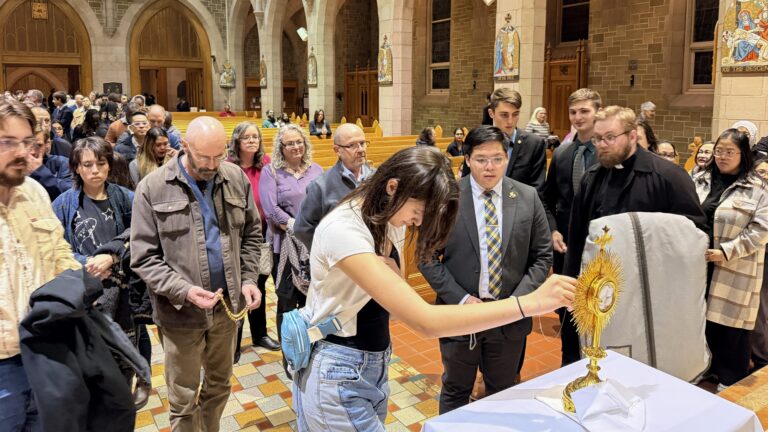
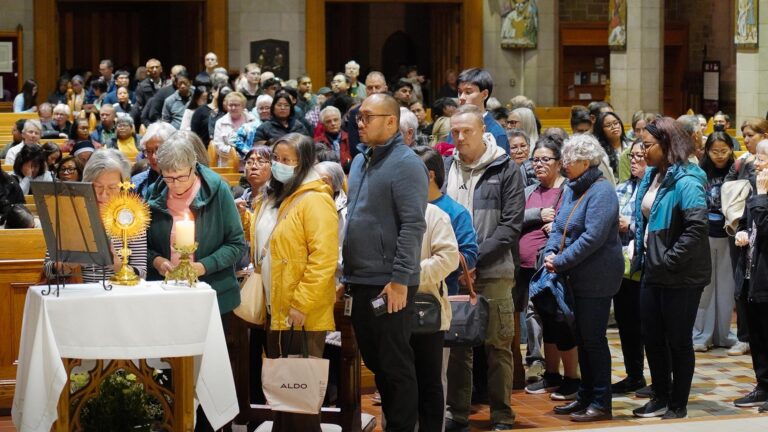
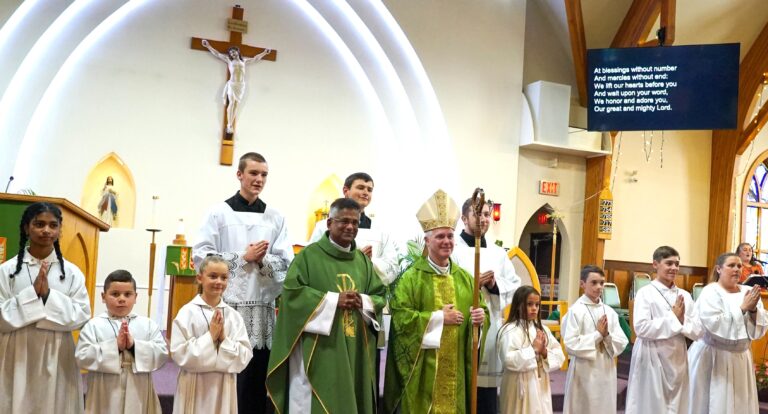
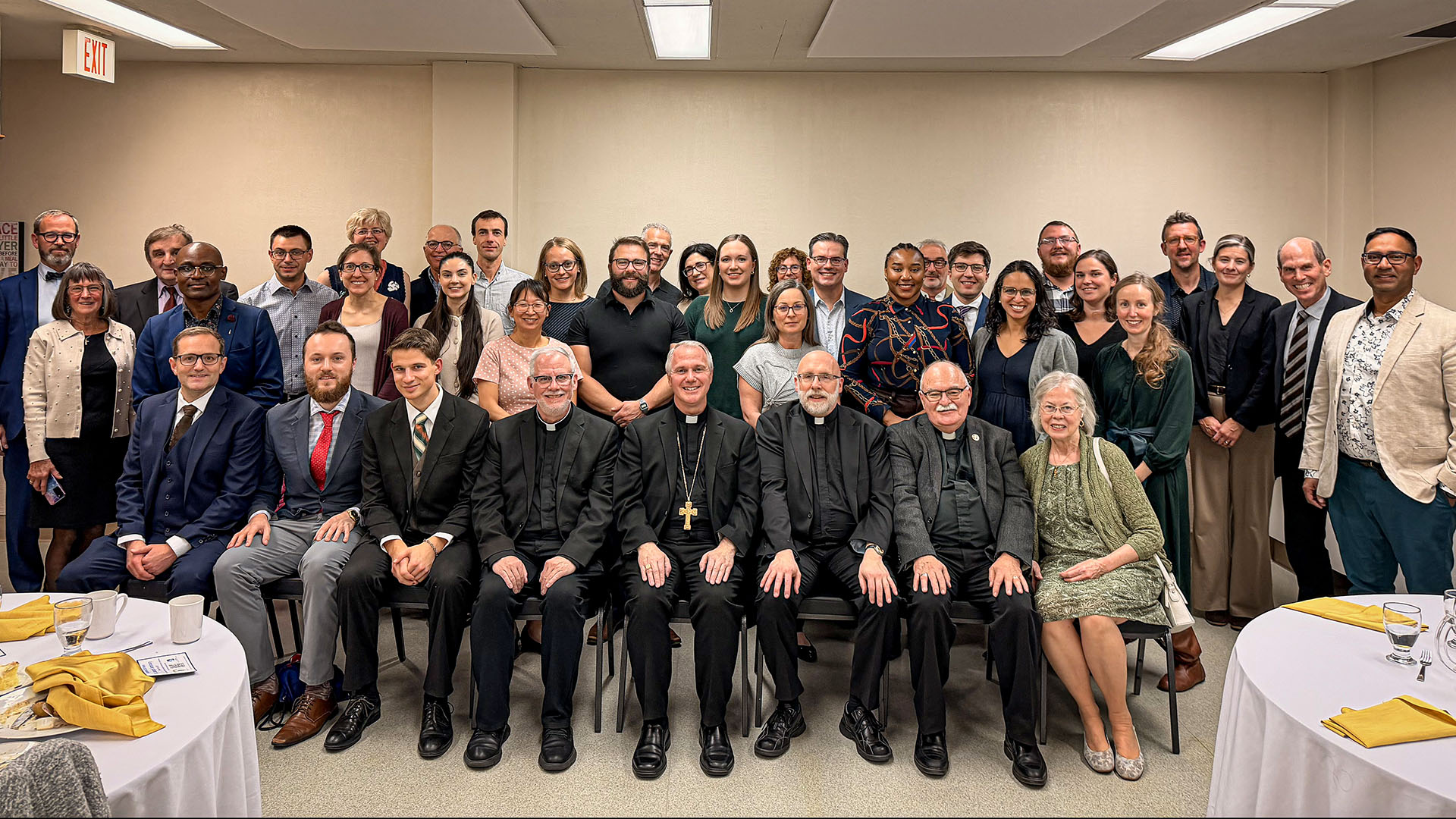
We have in the Gospel today probably one of the most familiar passages where the Lord Jesus, God’s Word made flesh, teaches the heart of the Gospel which is the love of God and neighbour. In this White Mass, as we gather with members of St. Luke’s Physicians Guild, we are invited to look at the vocation of a Catholic health care practitioner in the light of these two sides of God’s Law.
It is the lawyers in the Gospel today who ask Jesus to tell them which commandment in the Law is the greatest. We may be uncomfortable with the idea that love can be captured in a law or commandment. Love is not simply a command but a response to God’s love which goes before us and brought us mercifully into being. God loves us first. The human being is made for love in the very image and likeness of God himself who is an eternal Mystery of self-giving love: Father, Son, and Holy Spirit. Our human love is a free response to God as He has made himself known to us; a response to God’s love and goodness. This is why God’s love comes first in our life and our love is only satisfied when it gives itself to him completely, body, soul, mind and strength.
But that loving vision and closeness to God helps us to see our own goodness, lovableness (if that’s a word), and that of our neighbour. Finally, we cannot love the God we cannot see if we do not love the neighbour whom we do see. (1 John 4:20)
The life and calling of Catholic physicians and health care workers is a response to love: God above all things and in all things, and our neighbour as our self. I can’t imagine the workload that so many of you carry in our overburdened health care system: the long hours of appointments, long shifts, surgeries, procedures, record-keeping. Somehow if we can keep that supernatural perspective of prayer and natural contemplation in mind, we can see each appointment as an encounter with God’s child and an opportunity to be an expression of God’s love to them. One of the religious sisters I know in my former diocese of Prince Albert worked in a difficult ministry. She works very closely with the poor and needy. There are always people knocking at her door looking for help. She confided once to a group of us, when she hears the knock on the door, she says to herself, “Let’s go see what Jesus wants.” That neighbour knocking at the door is a member of Christ’s Body and needs something: time, counsel, prayer, advice, love.
St. Benedict in his Rule for Monks says “Let all guests who arrive be received like Christ.” (53:1) The monks are directed to welcome those who knock on their door (especially the poor and those on a journey) to pray with them, read some of God’s word to them, wash their feet, and feed them. There is something here that resembles the directions we find in our first reading today from Exodus about being generous and loving to those in need, especially widows, orphans, and the poor. We are directed to be compassionate because we have known need ourselves. God’s people were once slaves and strangers in a foreign land.
These Scriptures about love direct us to care for the whole person who comes to us – not only their physical needs. You may not be praying like monks with all of your patients or reading God’s word to them. You are not counsellors. But how can I see and respond to this brother or sister of mine who is in need, and to see him or her as a child of God who is created to be the “glory of God.” St. Irenaeus of Lyons says the “glory of God is man (or woman) fully alive.” The vocation of health care practitioners can help people know God’s compassion and healing through respectful and loving care.
The other part of the call to love our neighbour which we shouldn’t forget is to love our neighbour as ourself, as Jesus says. Physicians, nurses, and health care workers, are not simply a commodity in the workforce or union; providers of services. Health care practitioners are to be given the freedom to be and to behave as a child of God, to follow their Catholic conscience, and to act in accordance with their faith. We are grateful for the blessing of our Catholic hospitals and care facilities which give us this space to be ourselves, fully alive in Christ, and so to glorify God and God’s beautiful plan for the world.
Medical practitioners are positioned so that they can look at their fellow humans with the clarity of microscopes, MRIs, X-rays, CT Scans, blood work, and all sorts of other tools that enable them to see into a body and make a better, surer diagnosis. That is a marvelous and weighty place to be: to see others in their fragility, weakness, nakedness, and need. Christ’s call to love God first and our neighbour always in God, amplifies this vision even further, to recall the real person who is before me, who is called as we are, to life and an endless life in God. Biological life in this world, we know, is not an absolute. Patients will eventually die as we will ourselves. Life in this world is an education in love, a springboard to real Life, endless Life in God.
The fathers of the Church said that natural contemplation leads eventually to a vision of God himself. To finish the quote of Saint Irenaeus: “the glory of God is man (woman) full alive. The life of man (woman) is the vision of God.”
✠ Most Rev. Stephen A. Hero
Archbishop of Edmonton
Providence Renewal Centre, Edmonton
October 26, 2026
Photos: Glen Elle
Sign up for The WINDOW, the weekly electronic bulletin with news from the Archdiocese of Edmonton