Archbishop’s Dinner 2026 – Christ in You the Hope of Glory

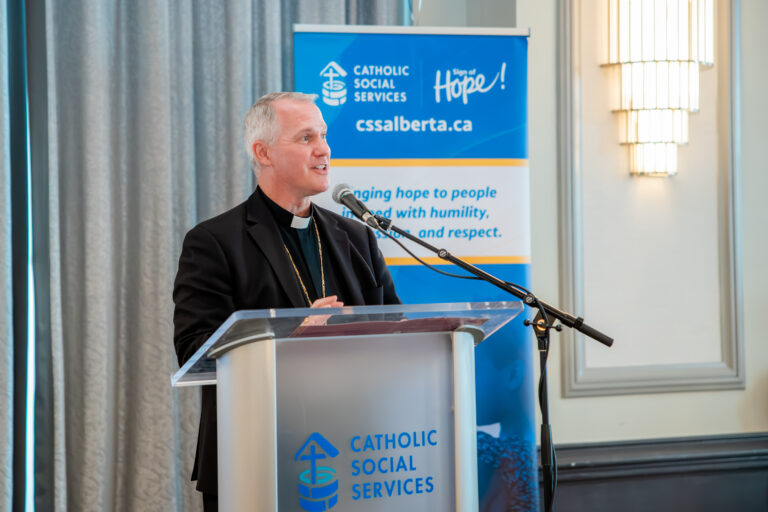
Good evening, everyone. Thank you, Fr Paul and Cindy, for your introduction.  I’m humbled by your kind words. I’m still getting used to seeing myself on screen and on so much social media. We have a very good communications department.  I think at this moment that I’m now on four different screens so it’s a good thing I can focus on my notes!

Thank you so much for coming to the Archbishop’s Dinner this evening and for your prayerful support over these first months of transition for me and for you. I have been looking forward to gathering tonight with so many people from our parishes, Catholic works, and community to celebrate the good that God is doing among us. We call it the Archbishop’s Dinner. That’s because I invite you; I host you. But it is really about us.

I’d like to begin my talk tonight with a short text from St. Paul where he speaks of his vocation to be an apostle to the Christians in Colossae: “I became [the Church’s] minister according to God’s commission that was given to me for you, to make the word of God fully known, the mystery that has been hidden throughout the ages and generations but has now been revealed to his saints. To them God chose to make known how great among the gentiles are the riches of the glory of this mystery, which is Christ in you, the hope of glory. It is he whom we proclaim, warning everyone and teaching everyone in all wisdom, so that we may present everyone mature in Christ. For this I toil and strive with all the energy that he powerfully inspires within me. (Col 1: 25-29)

What does Saint Paul urgently want the Colossians to hear in his letter? Yes, he speaks about his call to be an apostle and “make the word of God fully known.” But he points them to the mystery of God’s plan that was hidden throughout the ages and then made fully known in Jesus Christ, God’s Son, his teaching, his death and resurrection. But this saving and liberating mystery he says is something that is present and growing within believers like the Colossians: “Christ in you, the hope of glory.” (Col 1:27) That’s true for us too.

The Lord Jesus is transforming the minds and hearts, even the bodies finally, of his baptized brothers and sisters through the mystery of his dying and rising, his cross and resurrection. The ministry of the apostle, and we might add, an archbishop, is to serve that mystery of “Christ in you, the hope of glory.” A hope, a light, a pure love, that brings the real life of God and his eternity into our world, making God visible to us and to those around us.

One of the greatest saints that we know of in the Church, Saint Augustine, wrote beautifully about the mystery of our life in Christ in a vast library of books. Pope Leo, an Augustinian friar, is certainly encouraging us to re-read this important thinker of Western Christianity today. I think it is providential and here’s why. Augustine was writing at the end of a great civilization, the Roman empire. As he was completing one of his now famous books, The City of God in AD 428, armies of Vandals were poised to invade the Roman province of North Africa where he lived and soon Rome itself. In fact Rome had been sacked a few years earlier – something that had never happened before. Although the world and the established order that Augustine knew would end, the Christian faith that had come as a light into the world (and that Augustine would so well live and teach), would be the leaven that would help construct and transform the world into something new.

It may seem a little dramatic at this Archbishop’s Dinner to suggest that we may be living at the end of one civilization and at the formation of a new one. I don’t want to turn this into an academic talk tonight, but perhaps we all can agree at least that since the great wars in the last century, and even before, a transformation of our world has been occurring with greater and greater rapidity. There are attempts in many places to limit religion to the realm of one’s private life and order public life without a shared religious teaching or teachings as part of the picture.

Father Ron Rolheiser has spoken of modernity as the child of the Church, a sort of adolescent child rebelling against his mother. And he speaks with great hope of this child with deep Christian roots that will eventually return to his parents’ house when the adolescent grows up a little. I’m hopeful too about the world, but I would add that I think the adolescent society still needs its parent, needs some help, accompaniment, and witness. Even if our society has deep Judaeo-Christian values like love of neighbour, the equal dignity of all people, a concern for the poor and the sick, philanthropy – I wonder how long those values can be upheld if there is no explicit religious faith that inspires them. Those values can get lost in conversations about competing rights, autonomy, and my truth, your truth. We have seen how an apparent concern for the dying and the elderly can be twisted into a false sort of compassion that euthanizes or discards the ones who are most vulnerable. Modernity, if it is a rebellious adolescent child of the Church, is today tempted to euthanize his mother rather than return to the warmth and freedom of her house.

I know that I risk inducing indigestion tonight by speaking about such things with your dessert.  But Saint John says in the Book of Revelation that God’s word tastes sweet “as honey in our mouth” but “bitter” or sour “to our stomach”[1] – because God’s word challenges us sometimes to be different. God’s word challenges us to be willing to change, to commit, to do something difficult, to risk ourselves in love for his sake and the sake of our neighbour. The Church’s faith is sweet and nourishing. In the text I quoted to you at the beginning of this talk St. Paul points us all to the mystery of “Christ in you the hope of glory.” This means that, despite challenges and the shifting sands (or quicksands) of human culture, the Risen Lord is present and working, transforming you and me. And this is a wondrous mystery that the world still needs to get to know, no matter how well it thinks it knows Jesus. Catholics are about 23 percent of the population in Alberta. That means not everyone has had the opportunity to hear the message of Jesus Christ. You and I can be a leaven in the dough and it is in fact our call as followers of Jesus to be that principle of life and glory.

In these first eight months or so since my installation as your archbishop, my ministry has taken me to the edges of our archdiocese, its cities and countryside, and the people in all of those places. I have met with many pastors of parishes, leaders of our Catholic works, consecrated women and men, and people involved in numerous and varied good projects, movements, ministries, and Catholic institutions. Even though I am myself a son of this local church and have known its peoples for most of my life, I am seeing and experiencing the church here with the eyes and heart of an archbishop now. I have to say that I am amazed and grateful to see the gift of God that is growing and at work in so many. There is certainly an awareness of the need to become confident witnesses and, grounded in eucharistic life, to serve families and the larger societal family around us. If a new civilization is gradually being formed, one that is increasingly pluralistic, global, and technological; will the Church be part of this culture? Can we contribute to its wise and holy formation? That will be up to us.

My dear brothers and sisters, of course, we can and we must continue to be seeds of transformation in Christ, people ready to “give an account of the hope” that is in us. (1 Pet 3:15) I’d like to talk about three ways we can do this, all in reference to the mystery of Christ [growing] in us, the hope of glory.

I think one of the first major trends to which we Catholics can bring a much-needed response is around the whole realm of technology. [I say that as I look at myself on about 4 screens!] I don’t know about you, but one of my greatest concerns today for our world is with the realm of technology, virtual reality, social media, and artificial intelligence. This is a new industrial revolution, as Pope Leo has observed recently. As Christians, of course, we are not against technology or tools that can help us to work efficiently and, in a sense, smarter. But we are all experiencing the increasing space that this technology holds in our life, our dependence on it and the powerful global companies that provide it. There are questions about its demands on our environment and natural resources. On a personal level, we are feeling its impact on our real relationships: family, friends, community and our life of faith. There are increasing levels of anxiety and loneliness now especially among our young people who are just at the beginning of their life and do not have a long experience against which to weigh their feelings.

Too much technology can be isolating, addicting, and can give the illusion of relationship or provide a ‘safe space’ from the difficulties of in person friendships. I worry about how we have access to a steady stream of entertainment and stimulation always available online. As humans, we are made for real relationships and friendships which takes time together, commitment. We also need silence in our life, space, rest, and some solitude, to regularly make room for God in prayer. We need this silence, space, and time to cultivate that most real friendship that there is in the universe with the God who made us.

Dependence on devices slowly empties our memory or its need to hold on to information; the loss of skills like reading, writing, and rational thinking and argument – the more we consult AI companions who still make mistakes and are never open to the inspiration of the Holy Spirit. One of the great practices that I learned from the monks I had as teachers was to try to memorize portions of the Scriptures. These texts, the word of God, stored in our memory and heart, can come to us in quiet moments and begin the conversation of prayer wherever we are.

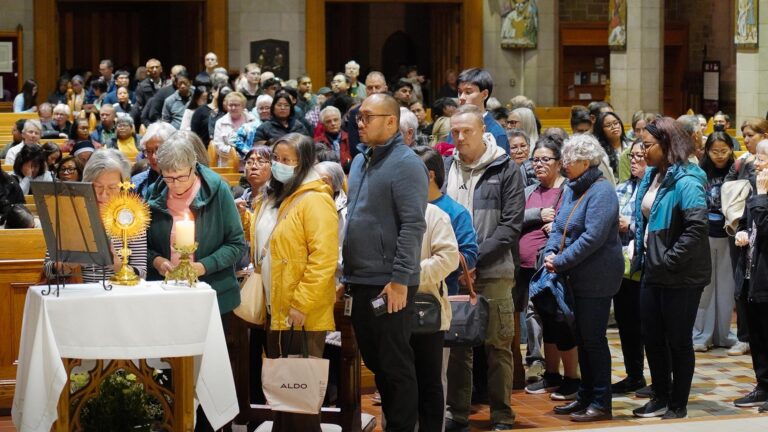
The good news is that in our archdiocese, as in many places in the world, through the witness and faith of our pastors and people, we are seeing an increase in youth, young adults and older adults who are finding faith and being drawn by the relationships and the beautiful incarnational worship that they experience in our parishes. The mystery of Christ draws them away from screens to spend time instead with friends and time before the tabernacle that conceals Someone we cannot yet see with our eyes, but who speaks to our heart, and who convinces and nourishes our mind with his truth. The mystery of Christ, present in the Church, draws them to loving community, conversation, sharing each other’s joys, helping to carry each other’s burdens.

The Catholic faith is wholesome and is a sweet antidote to the pitfalls of too much tech (and to many other things!) The mystery of Christ in us, the hope of glory, is embodied in a visible Church community, in personal (in person) relationships, male and female difference and complementarity, vocal and mental prayer, fasting and feasting, sacraments that allow us to touch Christ’s mystery through signs, words, gestures, postures, bells and smells. A body that will rise in glory in resurrection so that we may be fully human and like the risen Lord in the glory of heaven.

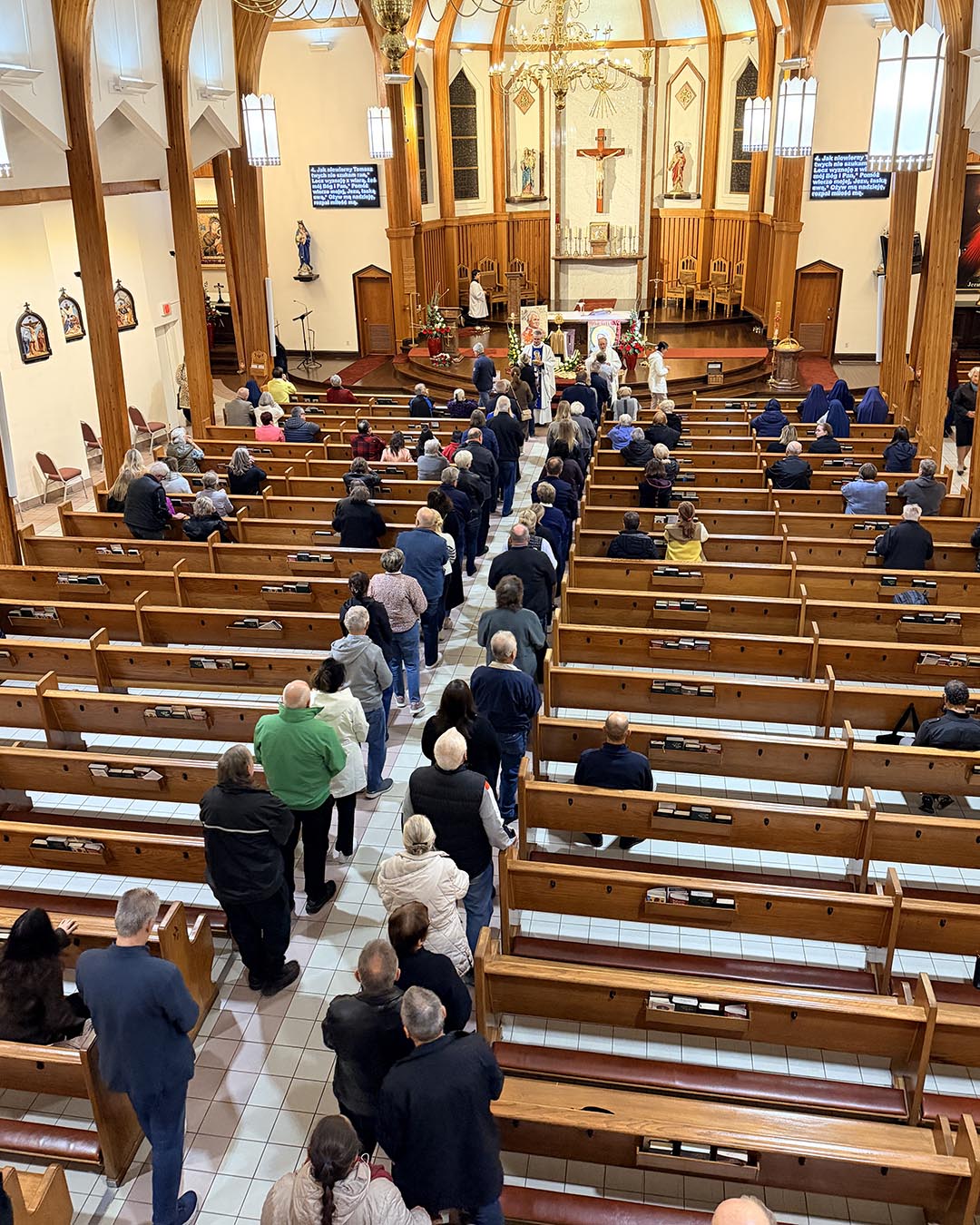
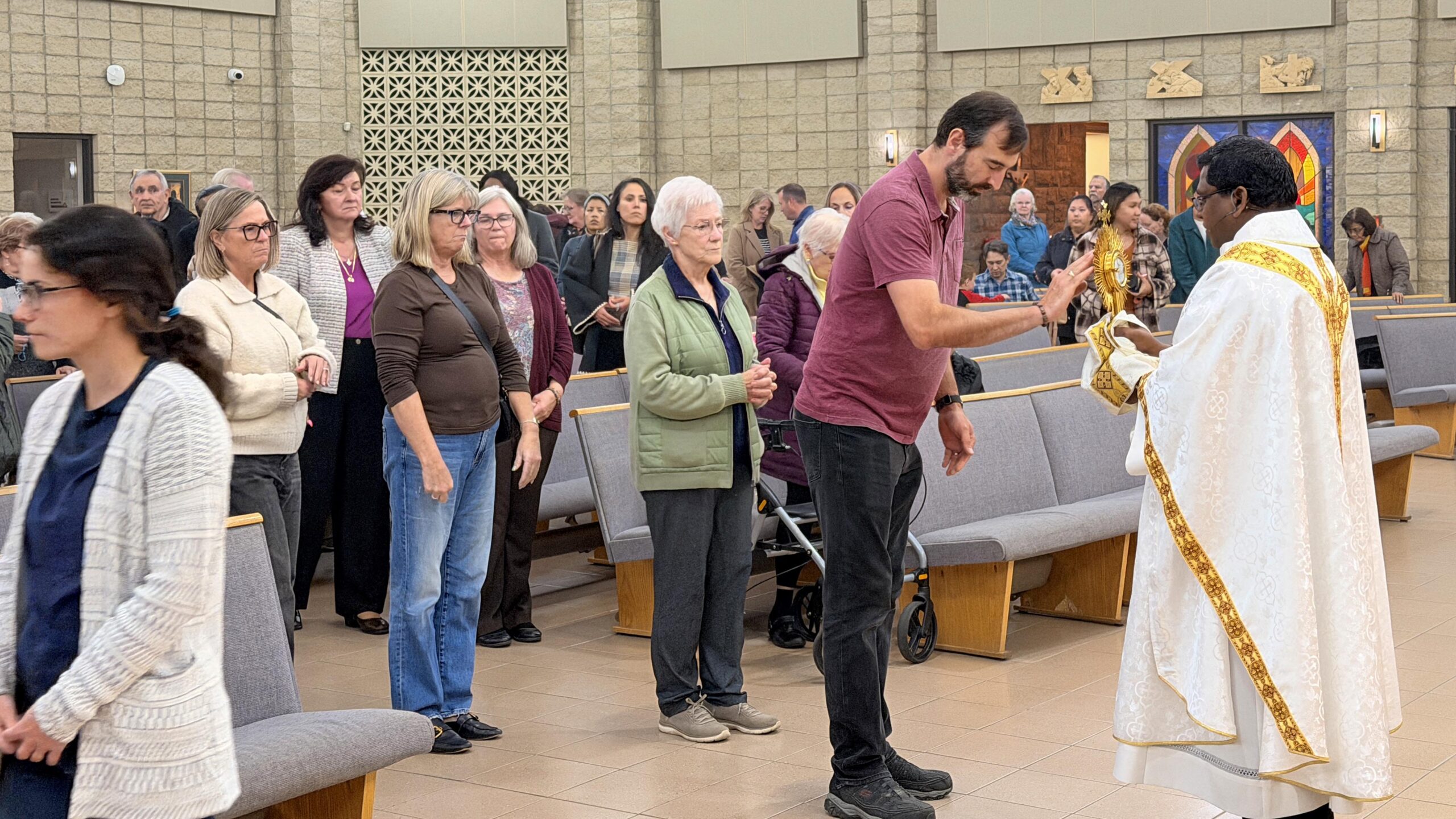
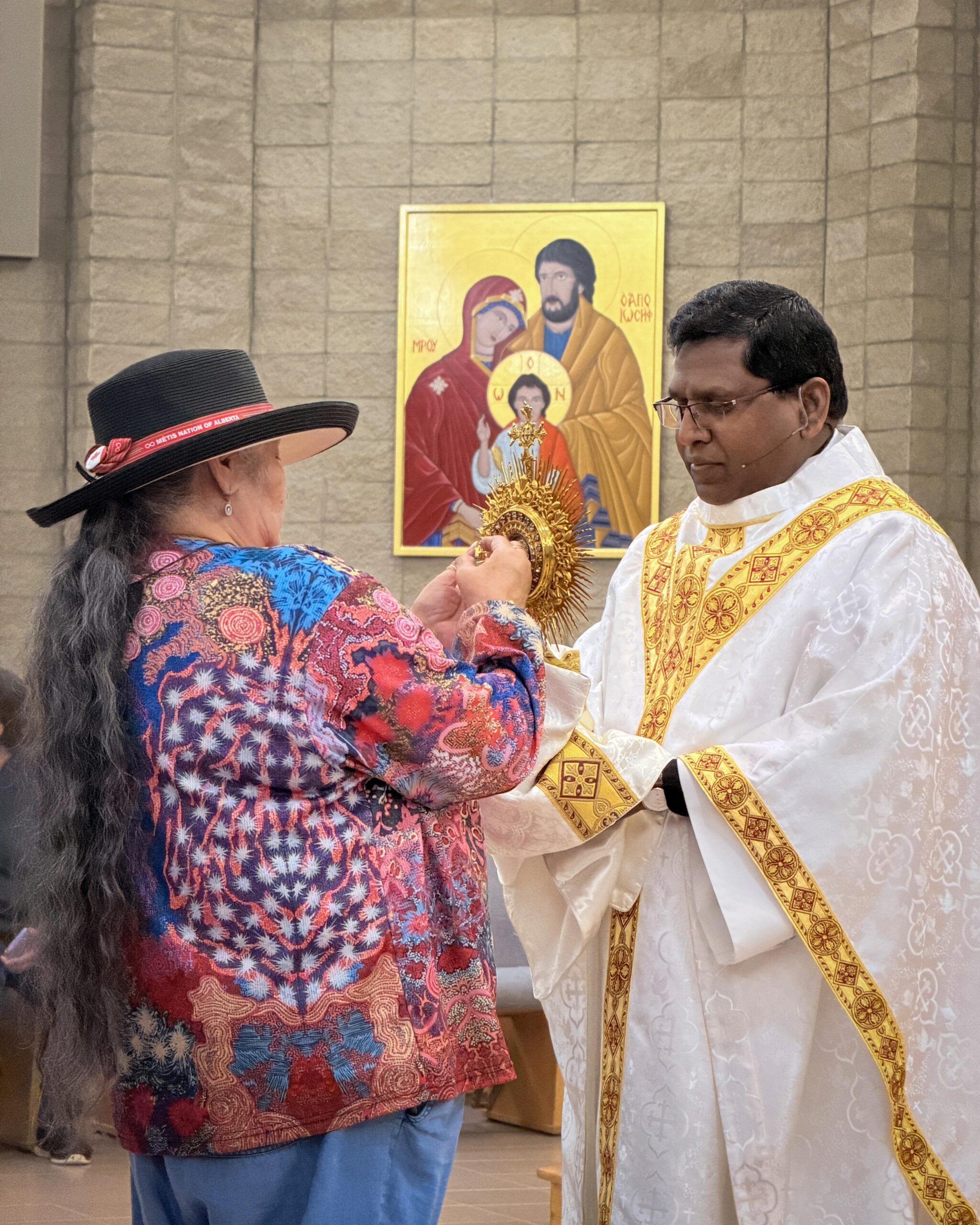
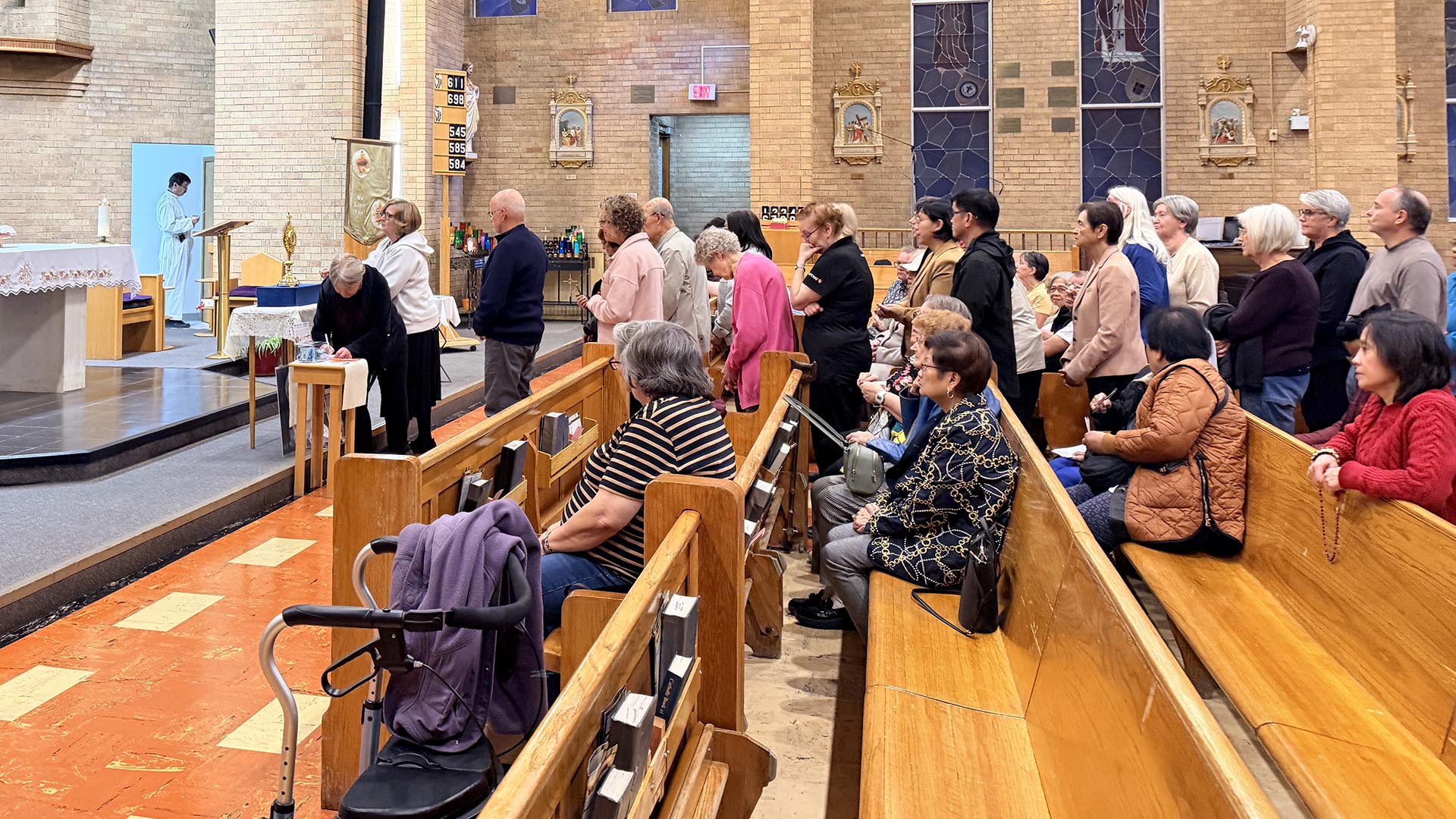
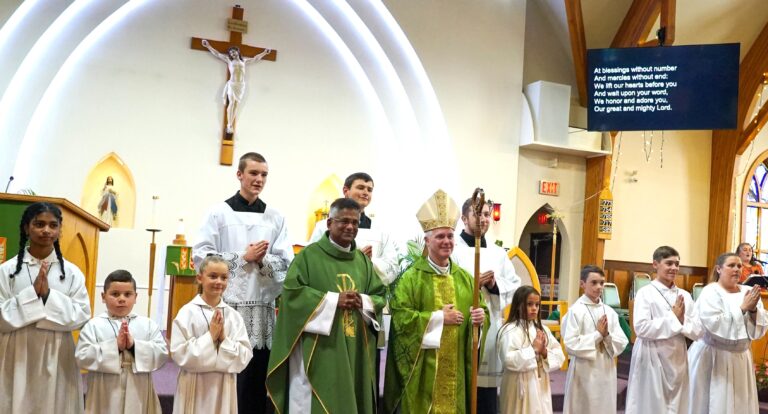
Perhaps it’s obvious now that a second way we can help to let Christ transform us and those around us is through this witness of prayerful worship in the sacred liturgy in our parishes. There have been many efforts in the archdiocese over the years to deepen our celebration of the sacred liturgy which is the “source and summit of the Christian life,” particularly the celebration of the Eucharist. (LG 11) I am grateful for the loving and devout celebration of the sacraments that I am finding in our parishes as I go around and visit our communities.

There is always need however for more formation and teaching about the liturgy and sacraments. The bishops across Canada are identifying this need especially since the pandemic and one of my goals is to help us to continue to grow together in our understanding and encounter with the Father, Son and Holy Spirit in the Church’s liturgy. The life of God that comes to us through the sacred liturgy is the source of our communion in Christ. It is also the cause of our transformation into him and makes us all to be “one body, one spirit in Christ.” Since the liturgy and sacraments are so crucial to our life in God, this can become a place of temptation or division. I think the devil tries to divide God’s church precisely where he can do the most damage. We can end up disagreeing about how best to worship and sometime be tempted to judge one another. How can we celebrate the Eucharist and Sacraments in the most beautiful way possible and with “full, concious, and actual participation” of all the faithful in the sacred mysteries?  The Church always needs to work on this peacefully with great love and mutual respect. I will seek to foster the liturgical life in our archdiocese so that we may grow in unity and draw as much as we can from the “wellsprings of salvation” in Jesus Christ. The great treasure of the Church’s prayer, the music, art and architecture that have grown up in her heart (and continue to develop) are a timeless patrimony that can evangelize and continue to infuse our world with the beauty of the Lord. In our celebrations, may we always grow closer to Christ who is the hope of glory and let his life unfold in our life.

This leads us to the third way that the mystery of Christ grows in us and can build or transform culture. Christ in you, the hope of glory. When Saint Paul writes to the Colossians and speaks of this, he is using the collective “you,” that is, “all of you.” Christ’s life draws us into communion with him and one another in his Body the Church. Our transformation in Christ thus is not only personal, me myself, but that happens with the help of others and when we help others, by loving and suffering with those around us and helping them to carry their burdens. The mystery of Christ is lived in the body, the community, the relationships of the church and radiates outward in service.

Pope Leo has reminded us recently in his Apostolic Exhortation Dilexi Te On the Love of the Poor that God’s Son Jesus himself became poor to heal our wounds and restore us to friendship with God. The Son of God has become poor like us to enrich us with God’s own life. This loving mystery of Christ who gives himself for the other, is at the heart of the Church’s love of neighbour and service to those in need. We are all poor in some sense and in need of God’s help. As the mystery of the poor Christ is in us, and the hope of glory, grows in us, Christ sensitizes us to those around us and we can be instruments of hope and glory to them.

We can be so grateful in the Archdiocese of Edmonton for our parishes and the many Catholic organizations and “works” that offer teaching, hospitality, and friendship for those who are searching or who are in need of some kind. My predecessor, Archbishop Richard Smith, would remind us to be always “unapologetically Catholic” in our schools, hospitals, and social service organizations. The Catholic faith and principles that inspire and direct these works help Catholics and others to meet Christ through the goodness of his disciples. People choose to come to us for help because they know that they can count on us and that we love and respect them. Being Catholic is not a liability in our public works but is our deep and lasting strength. Those we love and help may not always wish to join our faith. We help them because we love them, but they are meeting Christ through our words and actions. They are drawing close to the mystery of God through us and God is working through us to help and heal.

My dear brothers and sisters, I have tried to lay out, through the help of Saint Paul, three ways that the life and mystery of Jesus Christ is growing in the Archdiocese of Edmonton and how you and I, by being transformed by Christ, are contributing to the healing and building up of the world in God. You will see that these three ways correspond with the three pastoral priorities that were discerned for the archdiocese a couple of years ago: formation for eucharistic worship, formation for confident witness and formation for service to marriage and families.

The thing perhaps that I wish to stress and leave you with tonight is that these priorities are not only for the church (those of us already in the church) but for the sake of our mission too. Transformed by Christ, you and I can become evangelizers and witnesses, builders of the City of God in our world and in our time, a civilization of true love. I want to say thank each one of you for your faith and witness in your families, parishes, and different ways that you serve. Thank you for your generous presence here tonight at my first Archbishop’s Dinner. May the life of Christ continue to grow in all of us: Christ in [us], the hope of glory. As St. Paul says, “It is [Jesus] whom we proclaim … For this I toil and strive with all the energy that he powerfully inspires within me.” (Col 1: 25-29) I promise to toil and strive for this with all my energy and heart. I invite you to do the same.

[1] See Rev 10:9: “Take it and eat; it will be bitter to your stomach but sweet as honey in your mouth.”

✠ Most Rev. Stephen A. Hero
Archbishop of Edmonton

Edmonton Convention Centre

October 2, 2026

Sign up for The WINDOW, the weekly electronic bulletin with news from the Archdiocese of Edmonton.