Archbishop Stephen Hero not only grew up in the Archdiocese of Edmonton, but he was also ordained here in 2000 and spent 16 years as a formator at St. Joseph Seminary. As a parishioner of this Archdiocese, what general interactions have you had with him?
I first met (then) Father Stephen early in 2017, when I came on my seminary Come and See (weekend event that offers a first-hand experience of seminary life). What stood out to me at the time was how kind and approachable he was. After knowing him for nine years, that impression hasn’t changed!
When he was still at the seminary, I used to pester him with all sorts of questions, especially about liturgy. I don’t think I always chose the most opportune times to ask, but he always answered gently and thoughtfully, as if he had all the time in the world. I was blessed to have Father Stephen as my group director for two years (in the seminary, each formator takes charge of a smaller group, which meets weekly to have discussions and pray together). He often had us read and discuss different texts and introduced me to great authors like Josef Pieper and great books like The Way of a Pilgrim. He is well read and had a lot of wisdom to share.
In what ways would you say Archbishop Hero contributed to your formation?
I think the most important way was by his example. He was gentle and patient; he wouldn’t gossip or criticize others, but would make excuses for their faults; I never heard him complain; and he was very prayerful. I considered him a model priest. He was very knowledgeable too. He has degrees in spirituality and liturgy, paired with a deep love of the Church’s tradition. He has a certain quiet enthusiasm for the things he taught, which inspired me to learn more.
One example is his love of Carmelite saints like St. Elizabeth of the Trinity or St. Thérèse of Lisieux. His affection for them drew me to immerse myself more in that tradition. As rector, he would give rector’s conferences every couple weeks or so. He would meticulously prepare handouts explaining some aspect of the liturgy or introducing us to a new devotion (like the Carthusian rosary), or present a power point on some aspect of the priesthood. The conferences often felt like another class, but I really appreciated them. He was a great preacher and I learned a lot from his homilies as well.
When he was appointed Bishop of Prince Albert what were your initial feelings and thoughts?
It was a whole mix of emotions. I think my first reaction was excitement. It felt like a well-deserved appointment and I was happy to see a more rural diocese get such an excellent bishop. I think everyone in the seminary thought he was a good choice. It was sad to lose him, though. I had hoped to ask him to be my spiritual director once he was no longer rector (since mine wasn’t going to be available the following year). I also was looking forward to taking classes with him at Newman Theological College.
There was also a bit of excitement just in knowing someone who was going to be a bishop. I had met bishops, but I didn’t know any particularly well. It also gave me a bit of a window into what episcopal appointments are like. We learned the news at the seminary with the rest of the world. Father Stephen had already gone to Prince Albert for initial introductions and interviews, but it was all kept under wraps. I believe he himself had only found out a couple weeks prior.
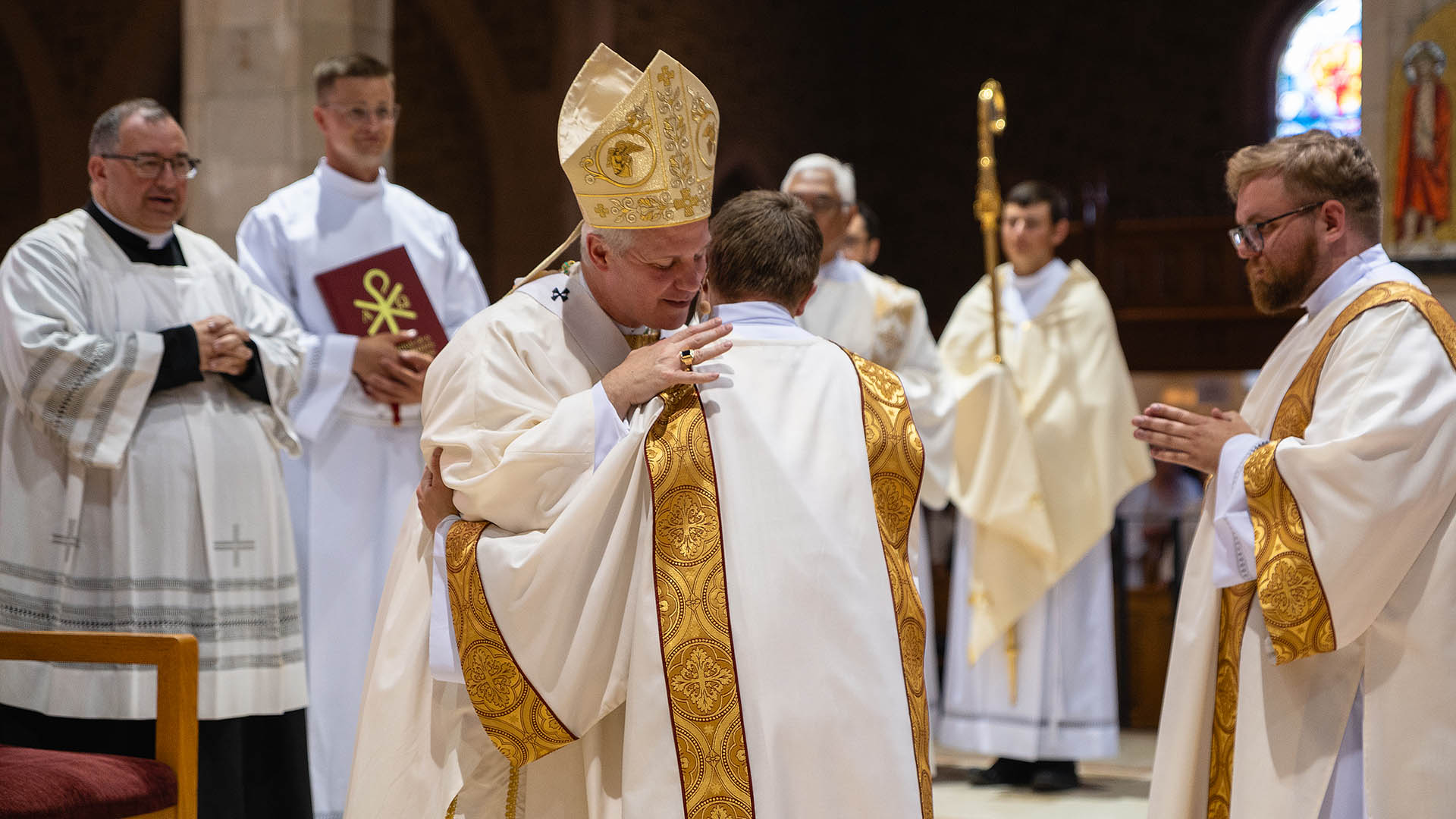
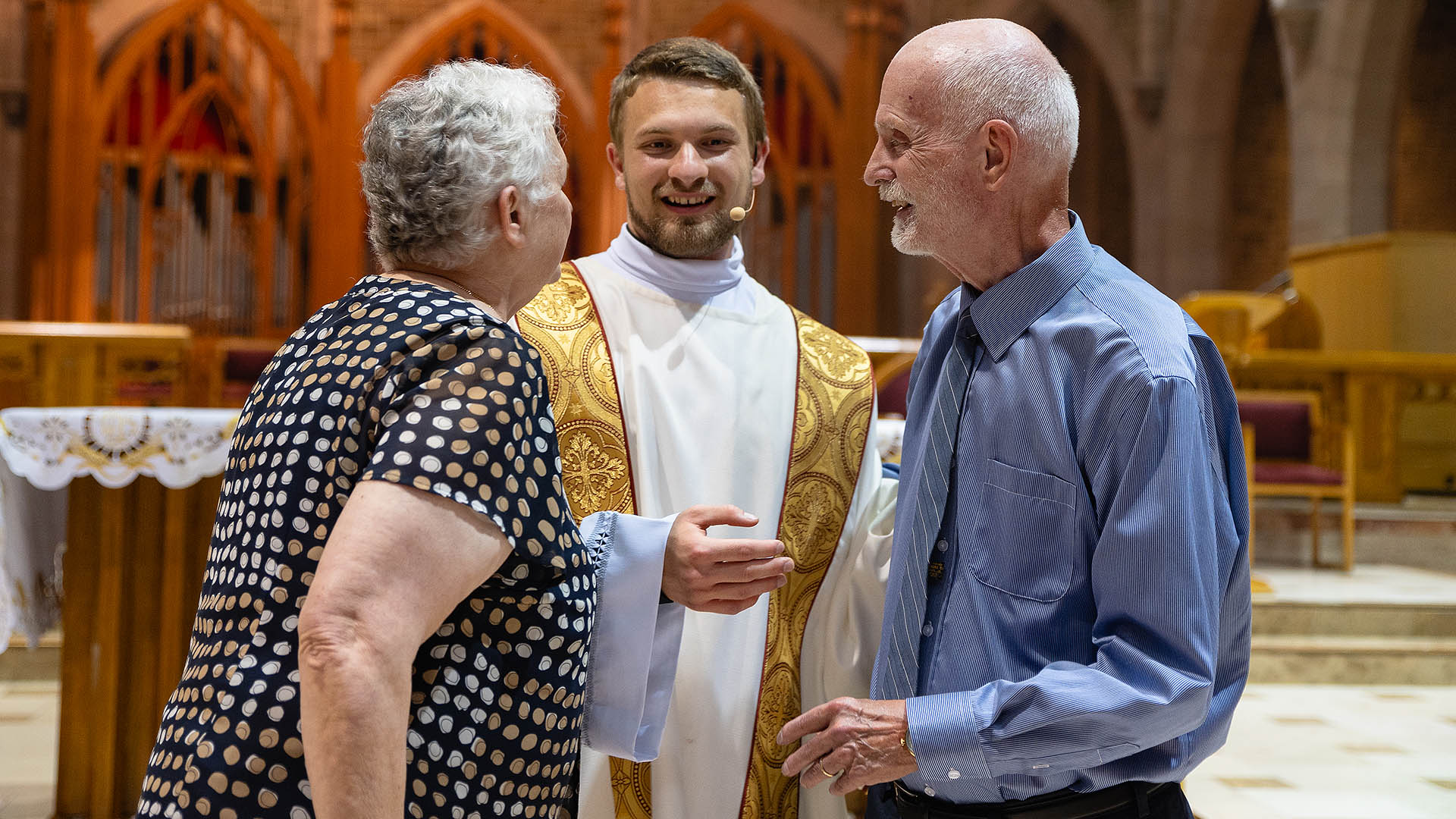
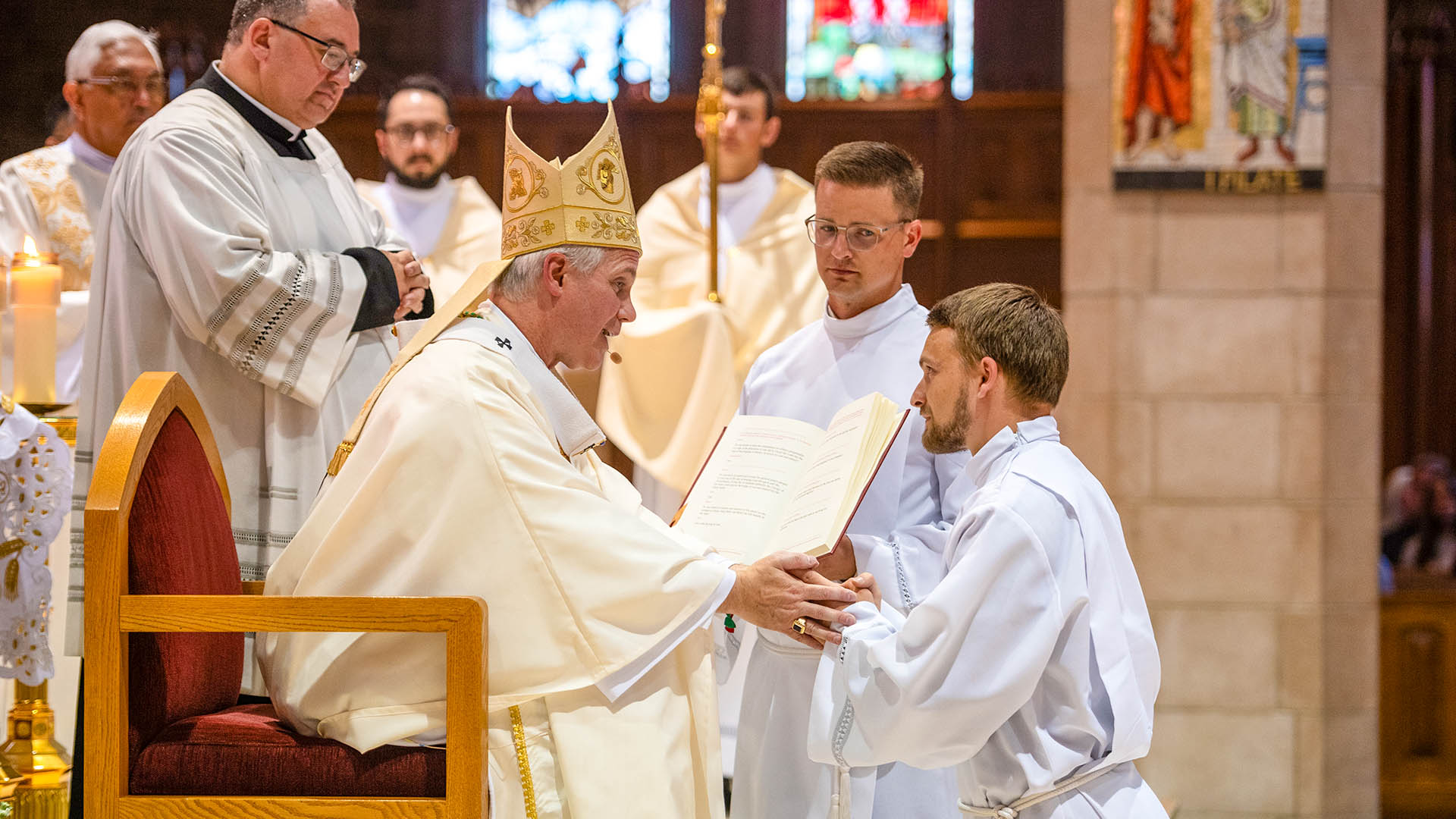
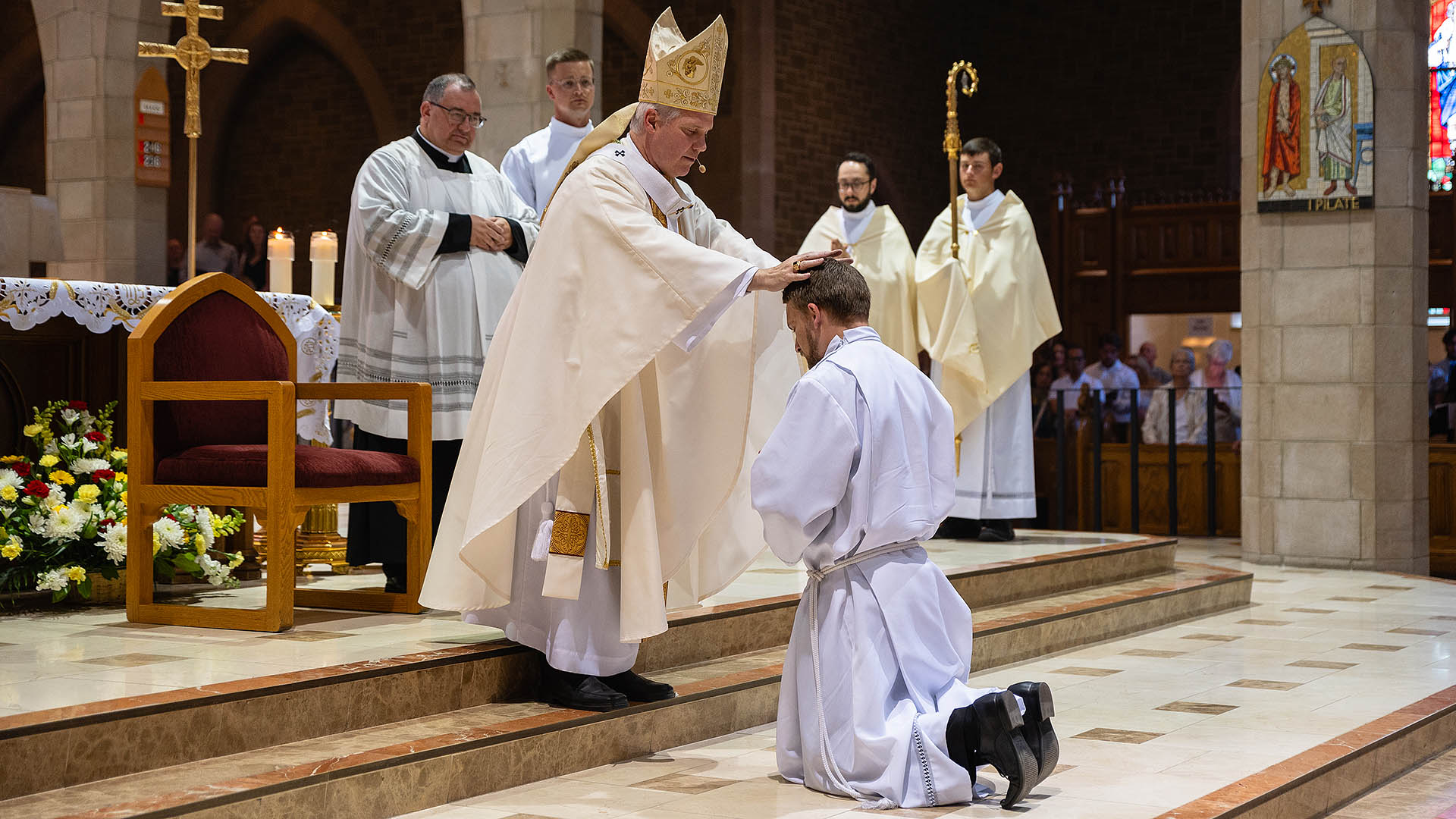
What was your experience of his episcopal ordination like?
Well, for one, it was quite a privilege that I was there at all! It took place in the midst of COVID restrictions, so the only seminarians that were invited were the deacons. However, Father Adam Lech asked me to be his driver so that he wouldn’t have to do the trip alone. Despite the limited number of people, it was a beautiful celebration. I had never witnessed an episcopal consecration before, so that in itself was exciting. To see a beloved formator ordained a bishop was very special.
Which memories that you have of Archbishop Hero would you say describe a part of his character especially well?
His Latin is quite good and a couple related memories come to mind. At our yearly Advent party, each formation group presents a skit to the rest of the seminary. Father Stephen would usually participate. One year, the premise of our skit was that “Vatican III” had been called to find a compromise between very different liturgical sensibilities. At one point during the skit, he improvised a very free-flowing charismatic prayer in Latin. Another time, for one of his rector’s conferences he wanted to introduce us to a set of prayers by Pope Gelasius (496-496). He told us that he wasn’t able to find an English translation, unfortunately, so he had spent the afternoon translating them himself. His translation was a beautiful, polished rendition that I made sure to hold onto!
Now that Archbishop Hero is your bishop and you are nearly done seminary, how will your past interactions with him affect your relationship with him during your future ministry in the Archdiocese?
After months without a bishop, it was a bit surreal learning that my old rector would be returning to Edmonton. It seemed a bit too good to be true—I truly can’t think of another bishop I would have rather had! Having a bishop with an “inside view” of the diocese makes a big difference. It can take years for a bishop to get to know a diocese well, and even then, he will only know it from a bishop’s perspective.
Archbishop Hero has known the Archdiocese for decades longer than I have and knows many of the priests very well. I think it will be easier to trust that his appointments and other decisions will be well-informed. I know that he truly cares about people, including me. I think that will make it easier for me to see him as a father to whom I can turn in times of need, rather than simply my “boss” or my superior.
Having seen Archbishop Hero’s contributions to seminary formation as a formator and rector, what are your informed hopes about the future of the Archdiocese under his leadership?
I expect that he will take time to really listen to everyone and will get along well with people, whether he agrees with them or not. We have already seen his desire to maintain continuity with Archbishop Richard Smith’s pastoral initiatives and I think we will see more of that kind of thing: validating the good contributions of others while offering his own.
Any other reflections on Archbishop Hero that you want to share?
For a priest with such an attraction for monastic life, it was amusing how aware he was of pop culture. He would not infrequently make Star Wars references and would surprise us with some of the things he knew from more recent pop culture. He is a man who is very much in touch with the world around him, but even more in touch with God — and solidly rooted in the life of the Church, both past and present.
-Deacon Andrew Sheedy was ordained to the transitional diaconate on July 16. He entered St. Joseph Seminary in 2017 and completed his studies in April. He is currently in the Vocational Synthesis Stage. His article was originally published in the spring edition of Exiit Qui Seminat, the seminary newsletter.
Photos: Luke Fuentebella
Support the Foundation for St. Joseph Seminary and Newman Theological College
Read more about St. Joseph Seminary
Sign up for The WINDOW, the weekly electronic bulletin with news from the Archdiocese of Edmonton.