Do you remember where you were on May 13, 1981? If you are older than 55 years, like me, you probably do. That was the date when St. John Paul II was shot in St. Peter’s Square. I was at school in Grade 5 when we heard the shocking news that John Paul II had been shot at close range in the abdomen and his right arm and left hand had been wounded. Two pilgrim women in the crowd near the Holy Father were also injured and survived. The gunman was subdued by a Swiss Guard and brave pilgrims near the Pope. We eventually received the consoling word that, after five hours of surgery, the Holy Father was doing well and on the mend. He would attribute his survival to the prayers of Our Lady of Fatima, on whose feast day he was shot. To this day, one of the cobble stones in St. Peter’s square, called sanpietrini in Italian, ‘little Saint Peters,’ is painted red to mark the spot where this happened.
This attempt on the Pope’s life occurred in the world well before the 9-11 attacks. We did not live on high alert in those days and were not used to taking all the security precautions we do today, but there were sadly still major political assassinations from time to time and attempted assassinations. It was unsettling for us young children (as I’m sure it was to our parents) to suddenly have violence or evil strike out at Christ’s visible representative on earth, the servant of the servants of God.
I can remember a few years later (just after Christmas in 1983) being shocked to see in the newspaper and on TV that now famous black and white photo of St. John Paul II sitting close to his would-be assassin, Mehmet Ali Ağca in a cell at Rebibbia Prison in Rome. The Holy Father had a 21-minute private conversation with him, offering his forgiveness to him personally, although shortly after his surgery a few years earlier John Paul II had asked everyone to pray for Ali Ağca whom he called his “brother” that he had “sincerely forgiven.” He wanted to tell him this personally where Ali Ağca was serving a life sentence.
Through the years John Paul II also met with Ağca’s mother and brother and would even intercede with the Italian government to release him in the Jubilee of the year 2000. I was a student in Rome when Mehmet Ali Ağca was released from Italian prison into the custody of Turkish police where he was wanted for a different murder and so spent a few more years in prison there.
This example of forgiveness made a deep impression on me as a young man as I’m sure it did for many around the world, Christian or not. The Holy Father was certainly striving to live the Gospel of Christ and this risk to his life as a very public person never seemed to slow him down. In fact, this attempt on his life and his recovery from it, seemed to propel him as an ambassador of Jesus Christ on endless pastoral journeys around the world. He visited 129 different countries during his pontificate.
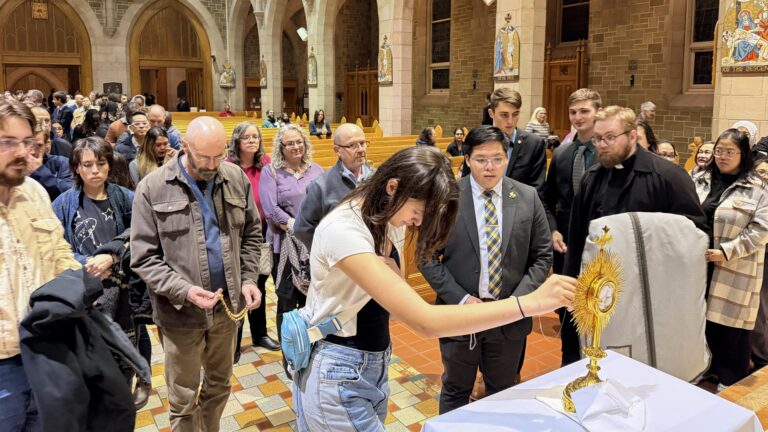
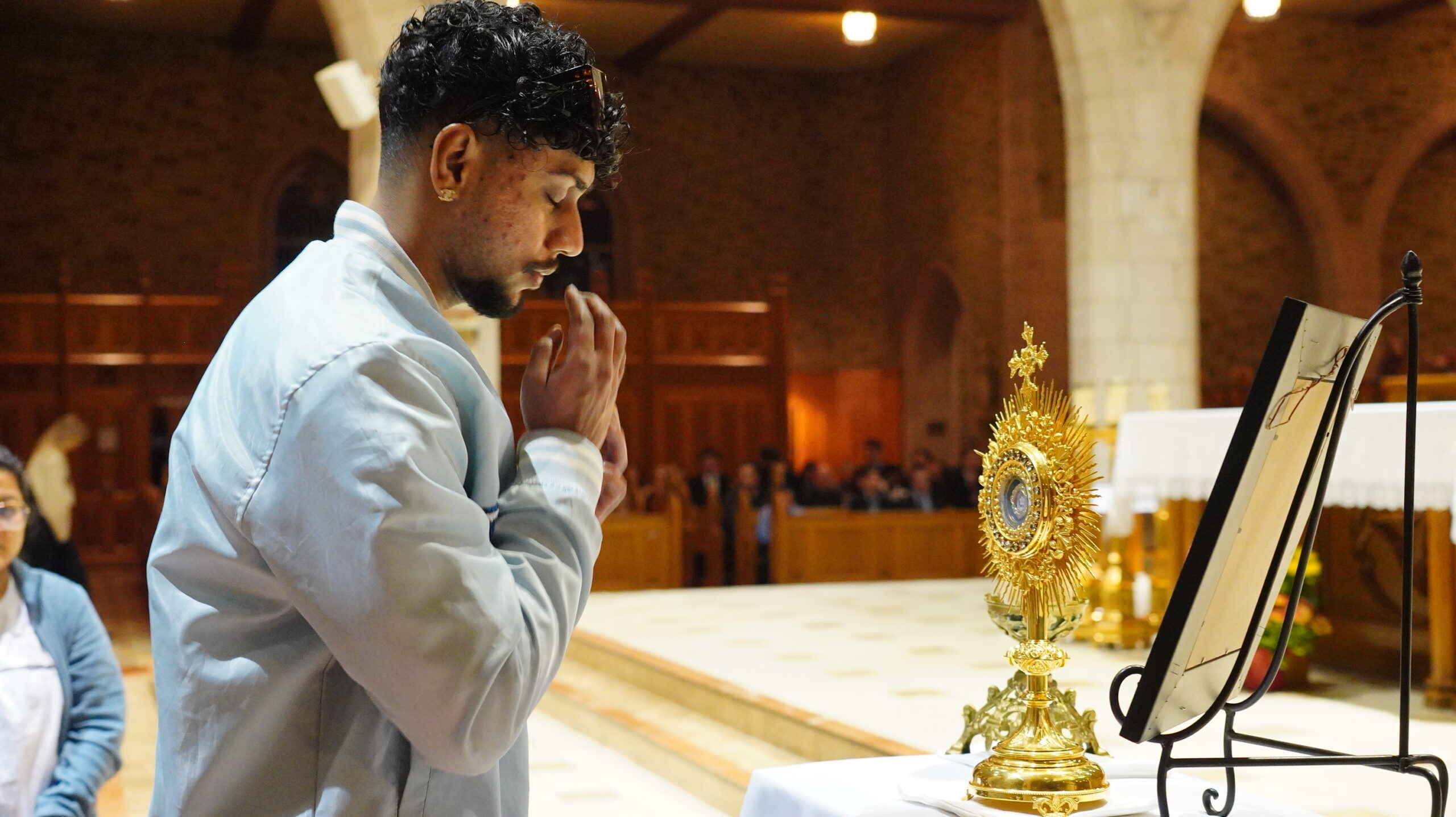
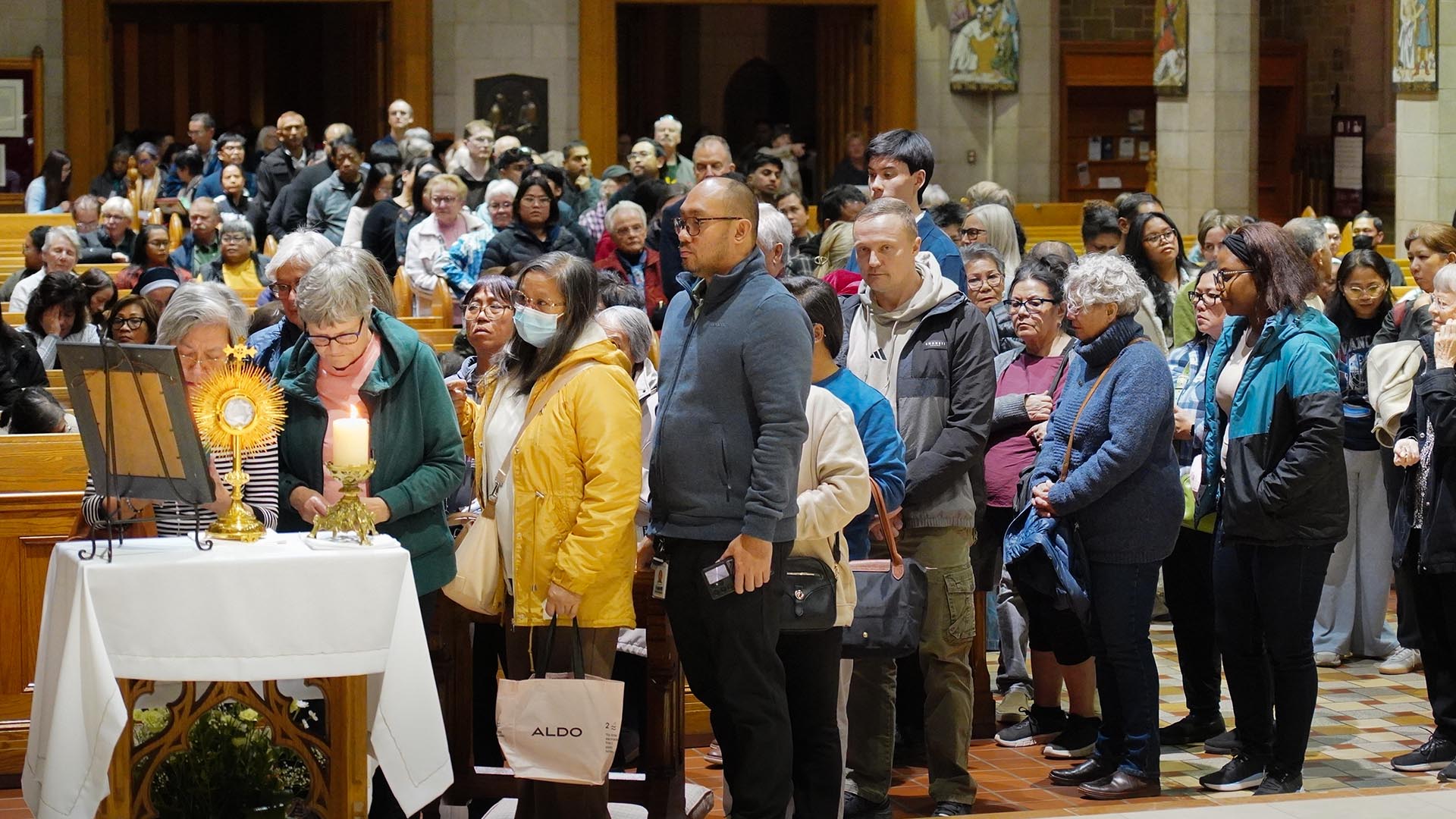
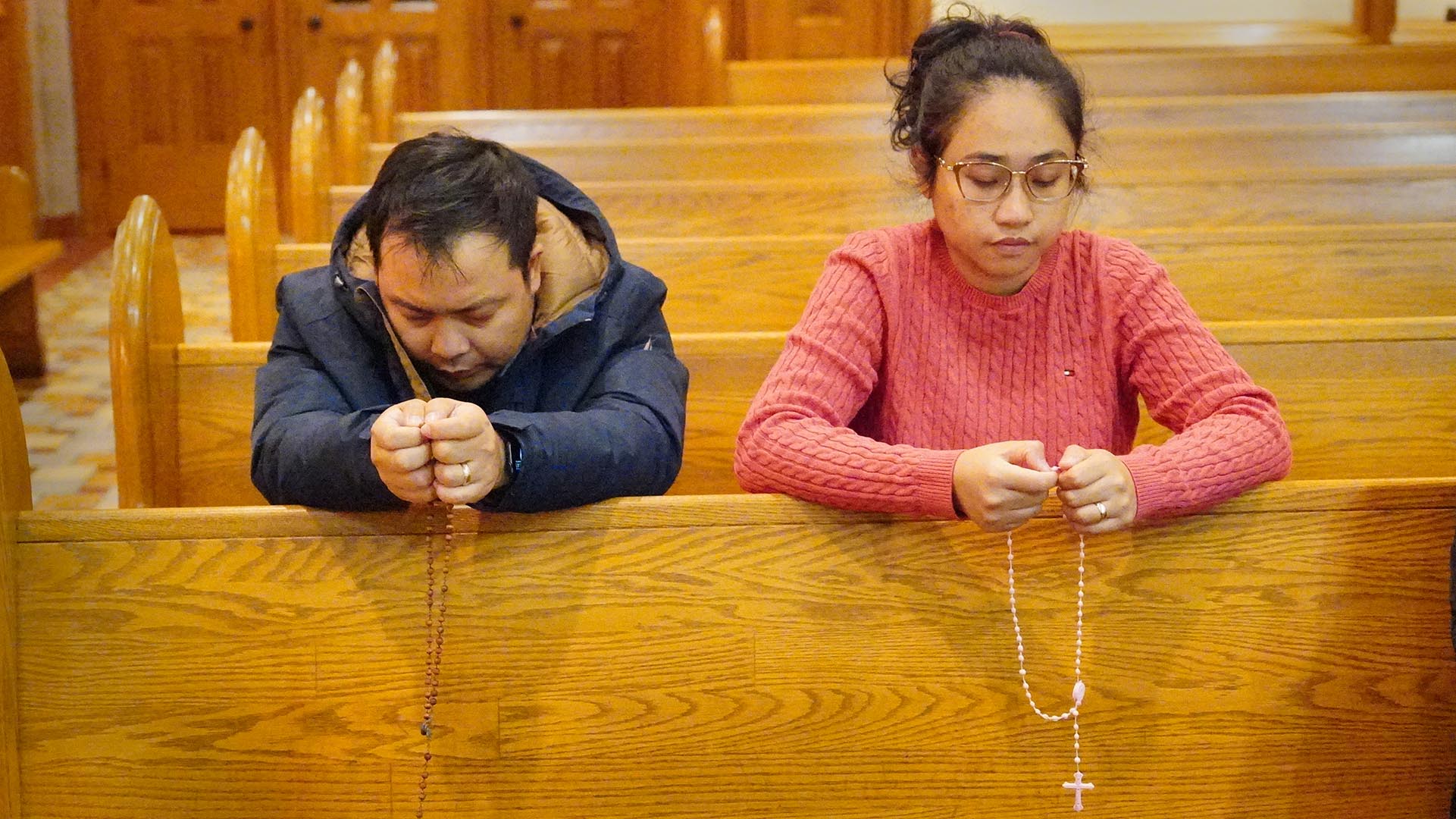
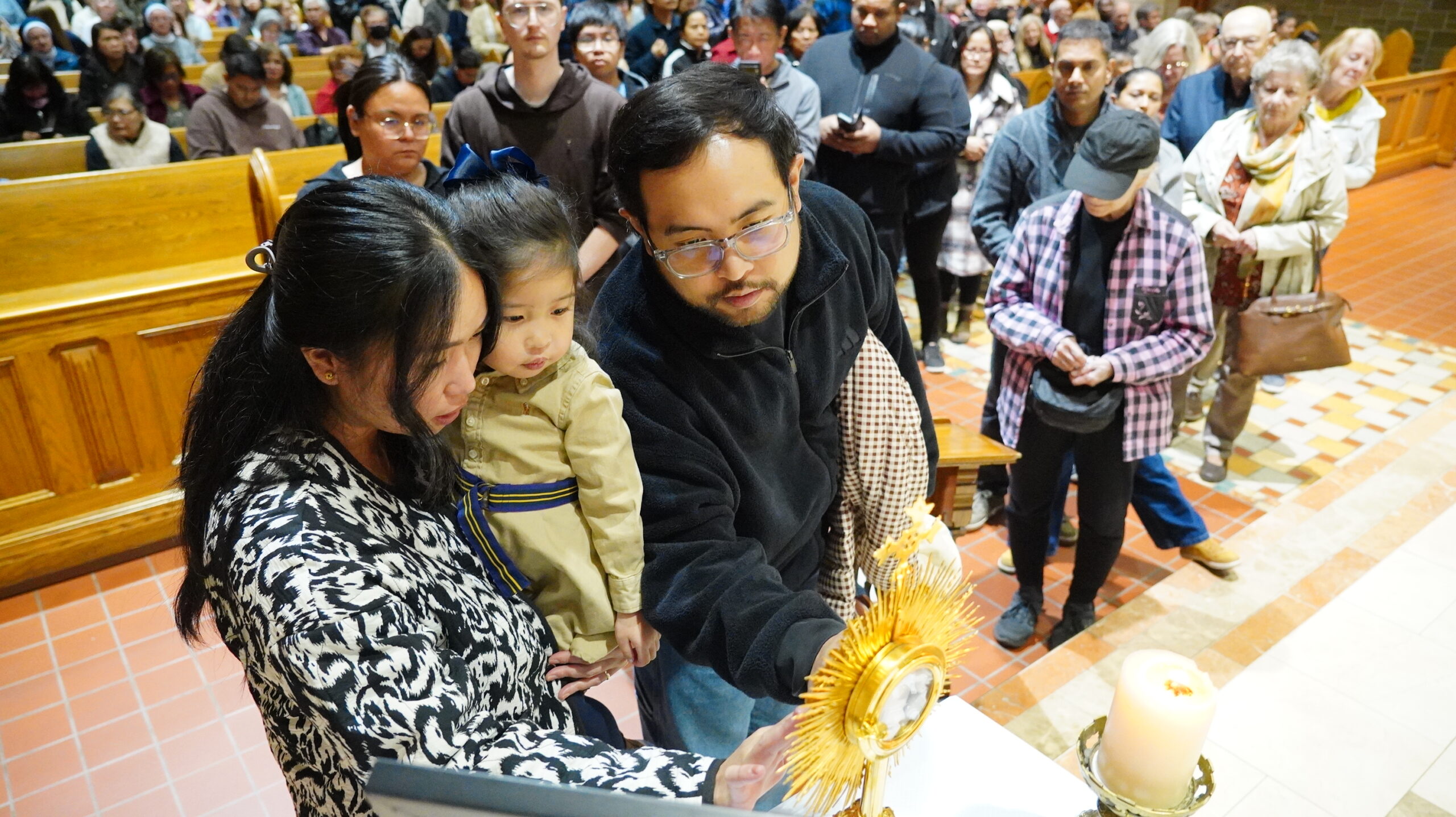
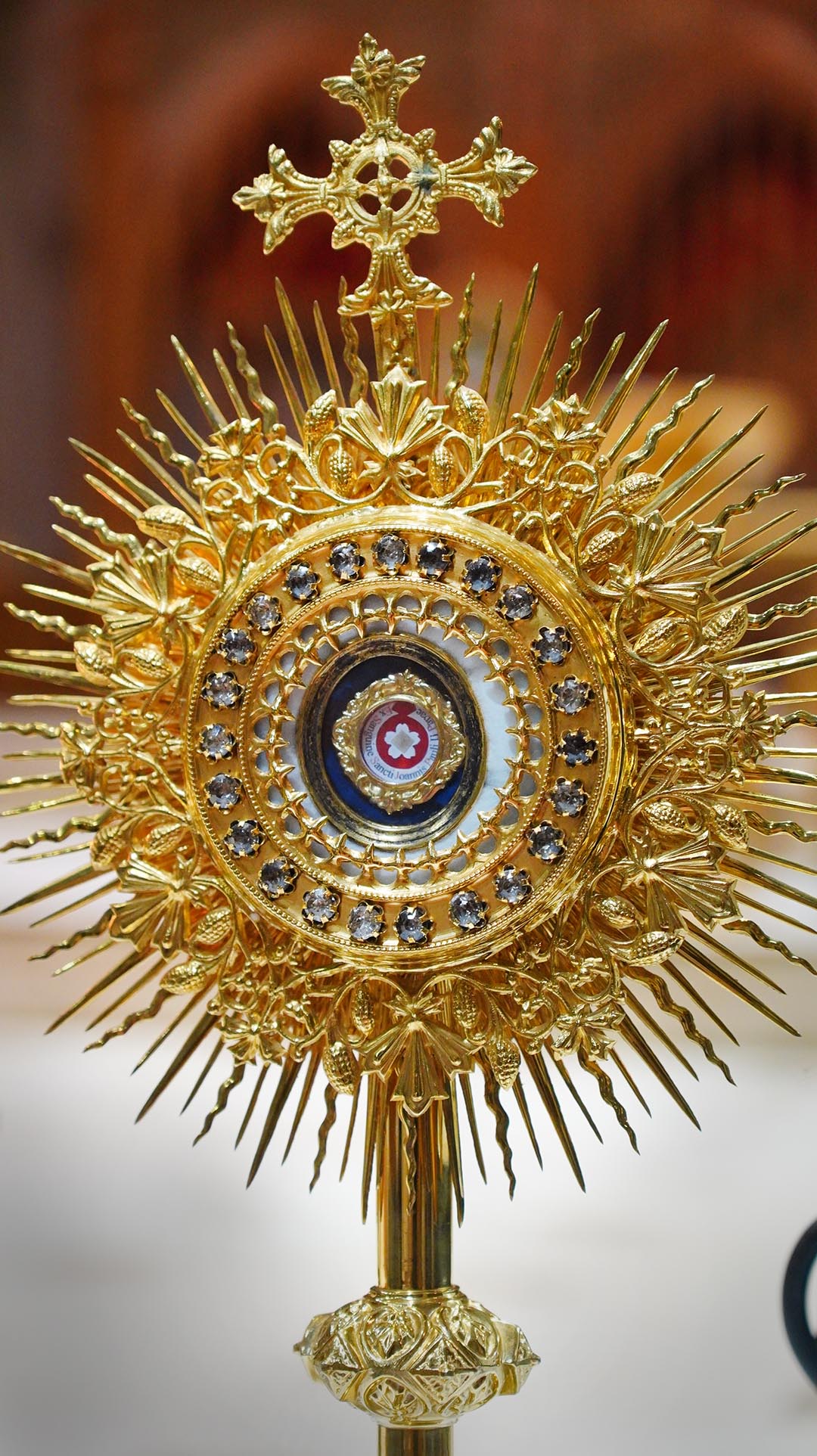
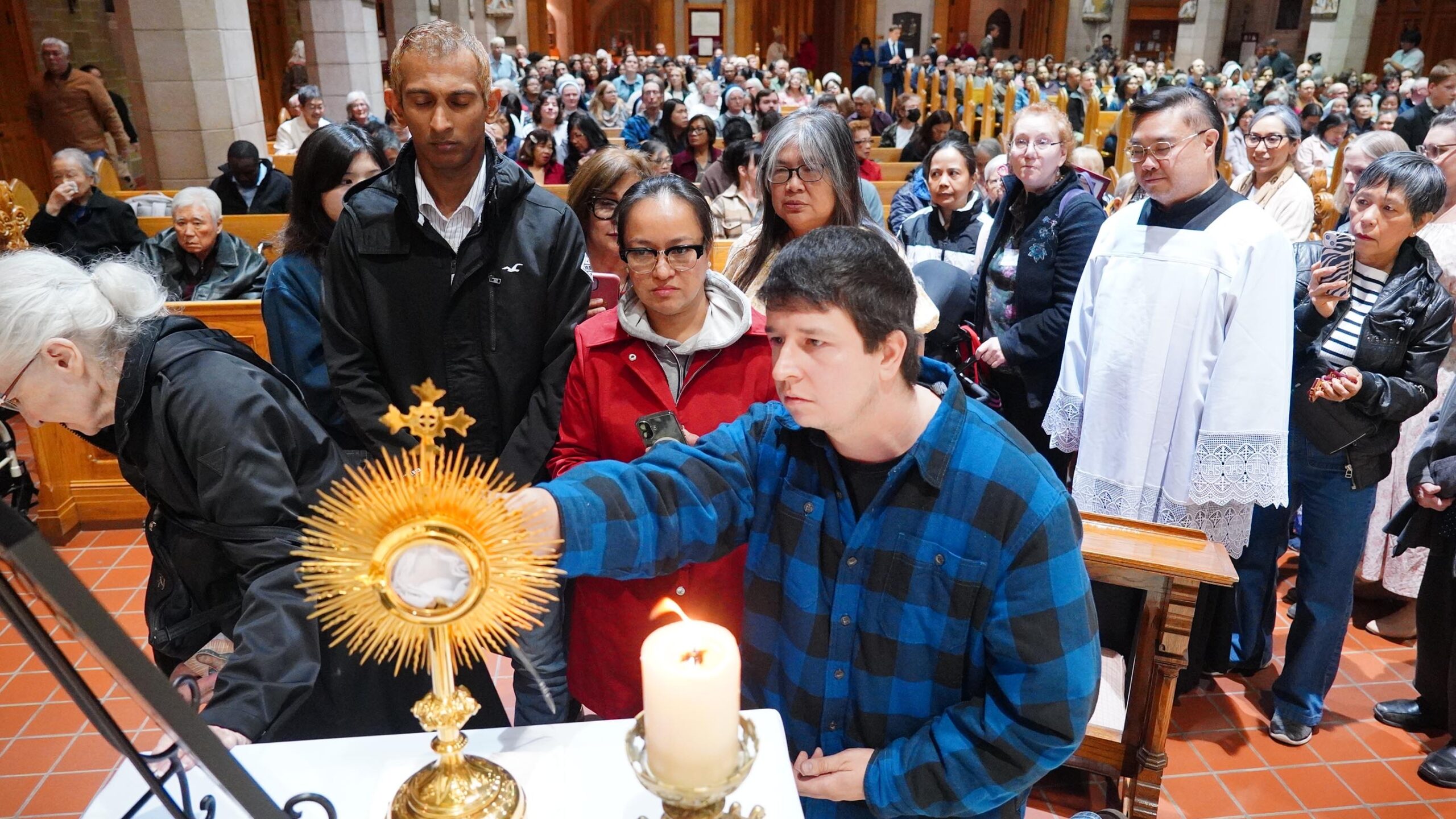
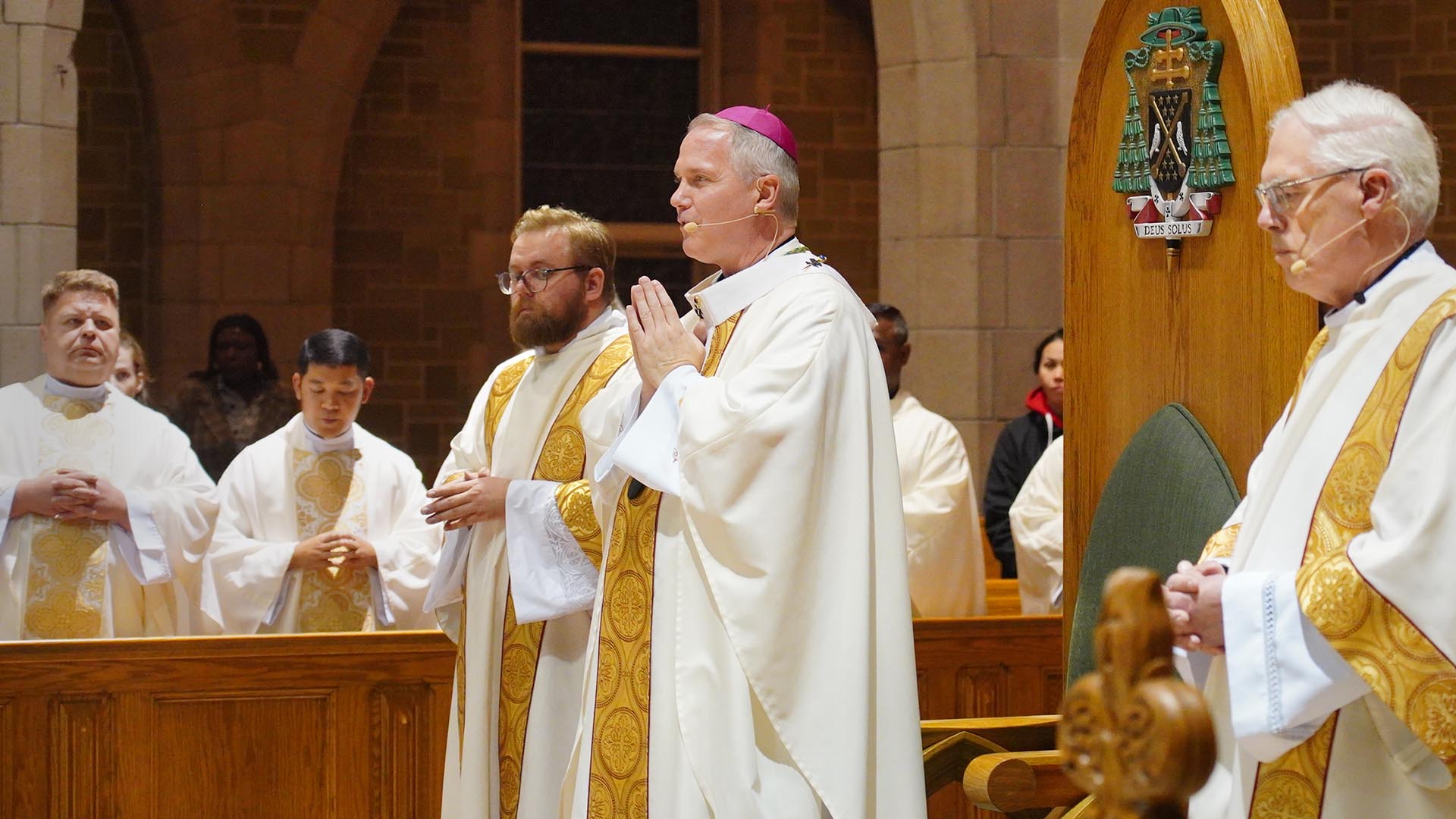
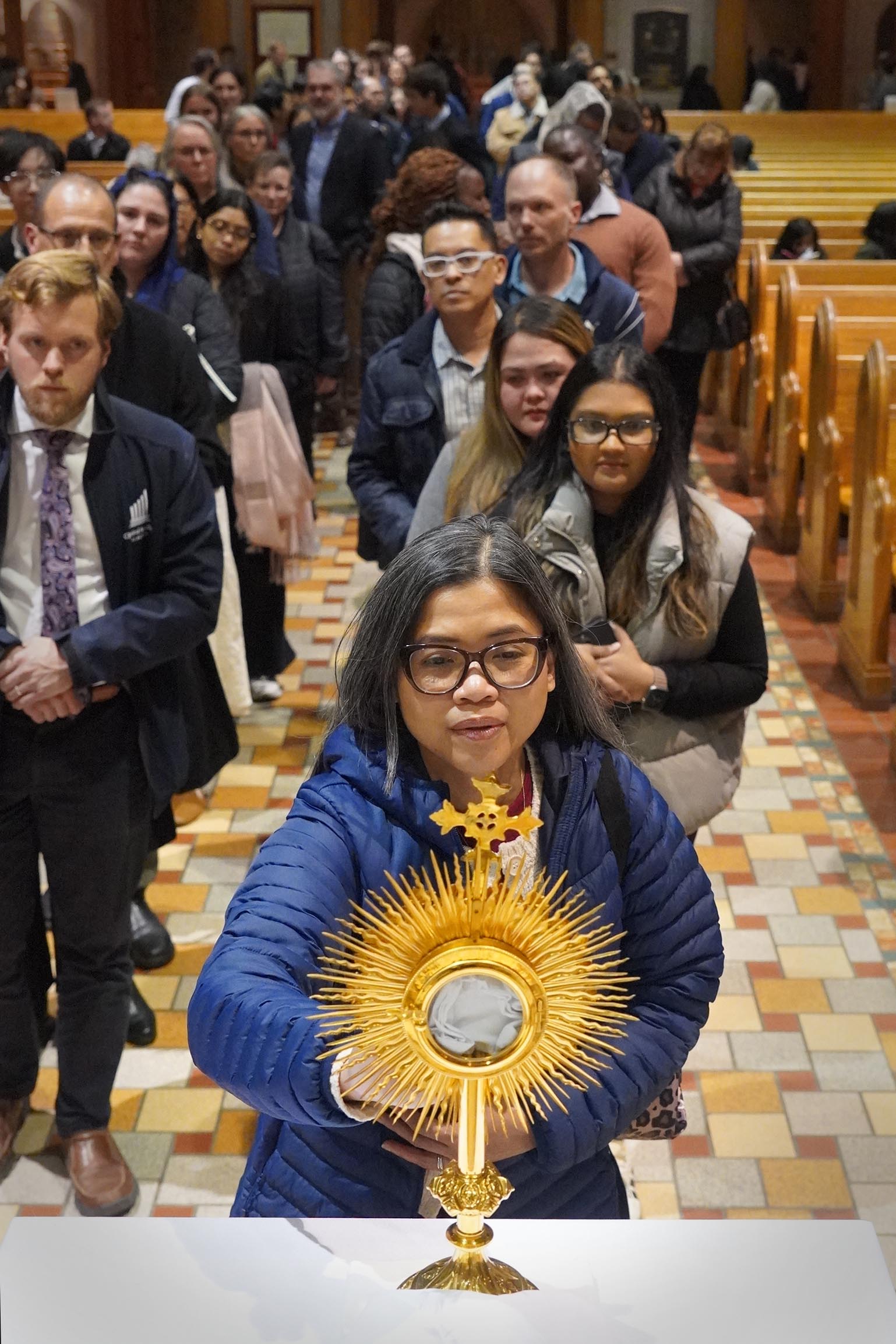
It is a very profound moment for me as the Archbishop of Edmonton to receive here at St. Joseph’s Basilica this tiny fragment of the white cassock of St. John Paul II that is still stained with the blood shed by the assassin’s bullets in 1981. It was a few years after that awful event that John Paul II entered this cathedral on Sunday, September 16, 1984, during his pilgrimage to Canada, and led an ecumenical service with a message of God’s presence and mercy. He said here in this cathedral (which he would name a minor basilica) that “God breaks through the silence, and even the noise, of our daily lives, revealing to us his truth and his love. [God] wishes to dispel our fear and strengthen our hope in his saving mercy.”[1] It is a beautiful thing to experience this Saint again among us in some bodily fashion, his bloodstained cassock still recalling the goodness, mercy and forgiveness of Jesus Christ who shed his Precious Blood for us on the Cross.
Mehmet Ali Ağca was a member of a Turkish extremist group calling themselves the Grey Wolves and he claimed to have been hired by another government to assassinate the Pope after John Paul II had visited Turkey in 1979. Ali Ağca’s story changed numerous times through the years so we may never know the full story of what happened or why and he is still troubled to this day by mental issues and delusions, even claiming now to be Christ. In the Gospel for this feast which we just heard, the Lord Jesus asks Peter to feed his lambs. In another place in the Gospel Jesus sends out his disciples as lambs among the wolves (Lk 10:3; Mt 10:16). This successor of St. Peter, St. John Paul II, was not afraid to go out among the grey wolves of this world to feed his sheep with the Gospel of Jesus Christ. And wolves themselves can be tamed.
It was faith in the Son of God, Jesus Christ, and his Gospel of life, mercy, and redemption that sent John Paul II to 129 different countries, sometimes exactly the pressure points of the world stage, to tell people to “open wide the doors to Christ”[2] and to not be afraid of the God who made us and who calls us to share in his life and holiness. God only wants what is truly good for us and our human community. Opening doors is not only a sign of possibility but of welcome, a sign that Someone is invited in.
John Paul II opened the prison door to Christ who made it possible for a victim and his would-be murderer to sit side by side and speak, to forgive and be forgiven. In Christ, the victim can become a free agent of God’s love; the victimizer, know that he is loved and given the chance to start over.
Isaiah says “how beautiful upon the mountains are the feet of the messenger who announces peace, who brings good news.” We are grateful that this messenger of good news stops here again in Edmonton and continues to tell the story of the Lord Jesus everywhere. We remember St. John Paul II for many things, for canonizing 483 Saints and beatifying 1344 more – showing us the glory of Christ shining on so many human faces and the concrete possibility of holiness in our life. He is the Pope of Encyclical and Catechism, who taught authoritatively on every subject, as successor of Peter, to confirm his brothers and sisters in the faith, to feed the lambs with solid food. He is the Pope of World Youth Day, inviting young adults to become witnesses of Jesus Christ. He is the Pope of the New Evangelization summoning every baptized person to cross the threshold of the new millennium with hope on Christ’s mission, to open doors, not close them.
Saint John the apostle says in one of his letters “perfect love casts out fear.” (1 Jn 4:18) We can be fearful as disciples before the challenges and complexities of the mission before us. Sheep and lambs are not the most inspiring symbols of our calling or the cleverest of God’s creatures. They have all sorts of reasons to be afraid and seek safety in woolly flocks and green pastures. They are braver and more relaxed when their shepherd is close by. The good shepherd that St. John Paul II was (and still is in heaven interceding for us) was not due to his personal intelligence and his mighty will, though he put his considerable gifts to good use in his mission. He was a good shepherd in Jesus Christ, his holiness a sharing in Christ’s holiness, an icon of the one true High Priest. It is the presence of the Lord Jesus in us by grace who equips us for our mission and perfects the gifts and talents that God has placed in us.
There should be no fear to open all our doors and windows to Christ and to let in the rushing wind of the Holy Spirit. The Spirit makes us children of the Father, brothers and sisters. Saint Paul says “I can do all things in Christ who strengthens me.” (Phil 4:13) May our celebration of the Eucharist tonight, Christ’s Body given for us, his Blood outpoured for us; may Christ himself be the “food of the valiant,”[3] as the Liturgy calls Him. May He strengthen us for bloodstains on our cassocks and clothes (if God allows). May He polish and place us smooth as a cobble stone in St. Peter’s Square, so that people may easily find the path to life in Christ. May He enable us to tame the wolves, and together, to step gracefully over mountains with God’s great news.
[1] John Paul II, Homily for Ecumenical Evening of Prayer, September 16, 1984, St. Joseph’s Cathedral, Edmonton: https://www.vatican.va/content/john-paul-ii/en/homilies/1984/documents/hf_jp-ii_hom_19840916_cattedrale-edmonton.html
[2] John Paul II, Homily at the Inauguration of his Pontificate, October 22, 1978: https://www.vatican.va/content/john-paul-ii/en/homilies/1978/documents/hf_jp-ii_hom_19781022_inizio-pontificato.html
[3] See the Prayer after Communion, September 20, Roman Missal.
✠ Most Rev. Stephen A. Hero
Archbishop of Edmonton
St. Joseph’s Cathedral Basilica, Edmonton
October 22, 2026
Photos: Lincoln Ho
Sign up for The WINDOW, the weekly electronic bulletin with news from the Archdiocese of Edmonton