“You need to take care of yourself.” In a society where busyness and stress seem to have become the norm, taking care of yourself is taking centre stage as a priority in the lives of many people. However, there can be a temptation to make this about oneself and selfishly cling to one’s time.
In my time at seminary, I have had many sessions that have spoken of the importance of self -care, particularly in the priesthood where the stress of an incredibly busy life threatens to cause the priest to burn out and become ineffective in his ministry. I have often struggled with the idea of self-care.
On the one hand, I have experienced my weakness as a human being and know I need to take care of myself in order to minister joyfully. Yet, on the other hand, Jesus tells us that there is no greater love than to lay down one’s life for one’s friends. (Jn 15:13) How do I reconcile the need for self-care with the command of Christ to imitate him in laying down his life? During my time on internship at Sacred Heart Parish in Wetaskiwin, I have learned that the two are not irreconcilable, but are in fact connected. Self-care is acknowledging that I am not God; it is knowing who I am and who God is.
I am human and have physical limits. I cannot work indefinitely; I need rest. Jesus recognized this in the Gospels, inviting the Apostles to rest after they came back from preaching the Good News in the surrounding towns. “The apostles returned to Jesus, and told him all that they had done and taught. And he said to them, ‘Come away by yourselves to a lonely place, and rest a while’ (Mk 6:30-31 RSVCE). I have learned to recognize that it is a marathon, not a sprint.
 Living a balanced life and getting the necessary rest is not meant to be a selfish focus on myself, but to free me to be an effective instrument of God’s grace, to give of myself for the rest of my life. I have to humbly know and accept who God has made me in order to truly give of myself. In knowing myself, I also need to know who God is. God is all-good, all-knowing, all-powerful. It is he who first loved each of us into existence and ultimately takes care of his people, not me.
In the Gospel of Mark, when Jesus tells his Apostles to come away and rest, they are followed by a crowd of people, who “were like sheep without a shepherd.” (Mk 6:34 RSVCE) Instead of calling his Apostles out of their rest, he takes care of the crowds himself. When we are resting, we are not leaving those that God has called us to serve alone. God loved them well before he asked us to and can care for them in ways beyond our imagination.
In my own ministry, I have often been tempted to think that I have to do everything, that I am the only person or instrument that God can work through. But I am not his only instrument. Every person I minister to was God’s child before I even met them. I need to trust that he can take care of them, even when his weak instrument needs to rest. However, while I am not all-powerful and untiring, God is. Nothing is impossible for him, even working through a weak and tired instrument like myself.
There are times in my ministry when I am tired, when I want to leave the office on time and God places a person or situation in my life that calls me to give of myself more than seems humanly possible. And while God may test us beyond our strength, he will never ask us to do anything that he is not prepared to give us the grace for.
In these situations that go beyond our human means, God does not abandon us, but provides the strength and rest that our frail selves need, just as he does in every moment of our lives. So how do we reconcile self-care with God’s command to love as he loves us? By recognizing that true self-care is not just a matter of taking care of ourselves, but of having a total dependence on God.
Yes, I must recognize my human weaknesses and use the means that God has given me to take care of myself. But the same God who made me his insufficient instrument can also use me to do more than is humanly possible. In all things, we must remain God’s humble and insufficient instruments, relying totally on his grace.
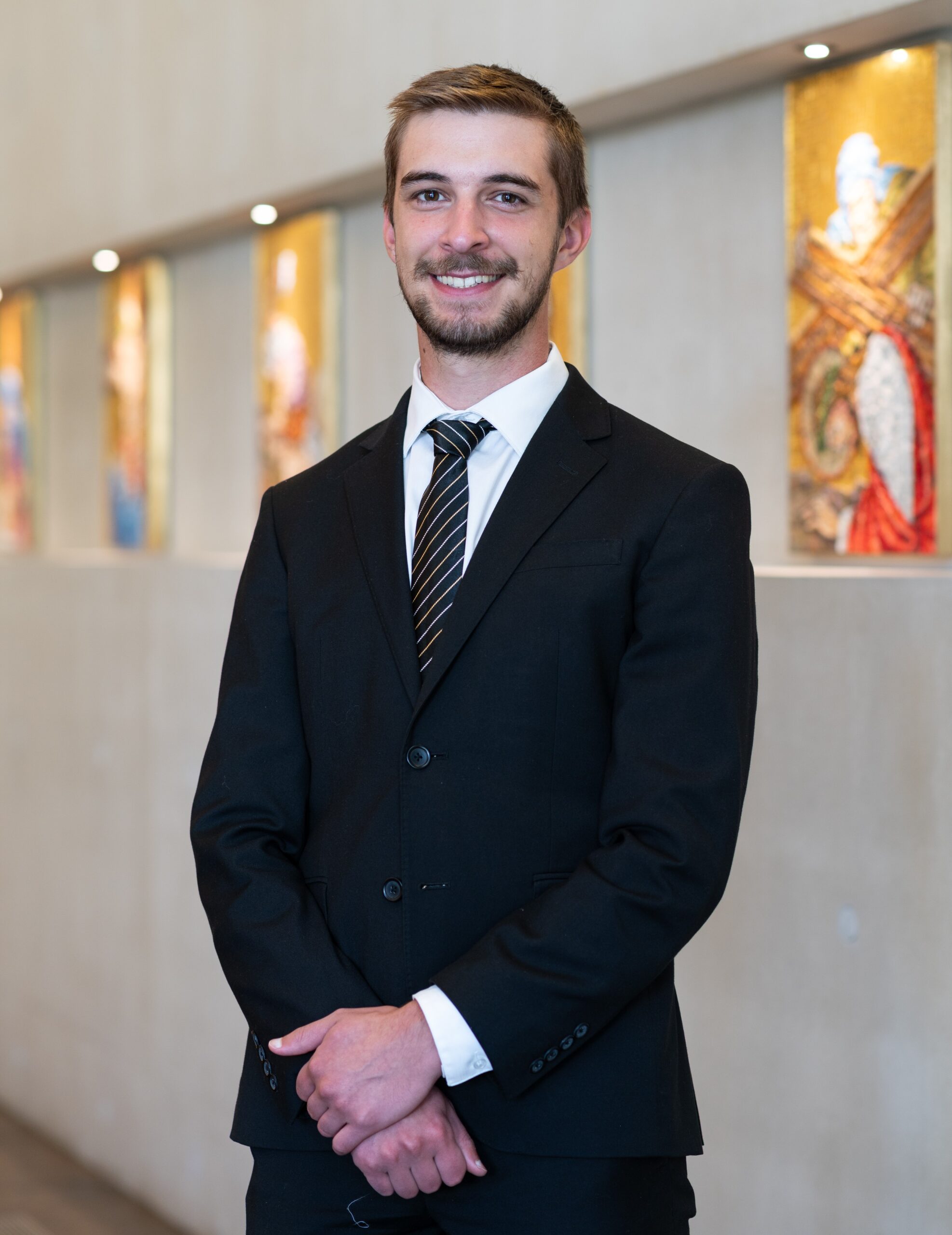
-Daniel Philips entered St. Joseph Seminary in September 2019 and is currently in the Configuration Stage. His article was originally published in the spring edition of Exiit Qui Seminat, the seminary newsletter.
Support the Foundation for St. Joseph Seminary and Newman Theological College
Read more about St. Joseph Seminary
Sign up for The WINDOW, the weekly electronic bulletin with news from the Archdiocese of Edmonton